Did you know? According to the Global Nutrition Report, more than 17.3% of the world’s population is at risk of inadequate zinc intake, with the percentage significantly higher in certain regions. Zinc—often overlooked as a trace mineral—is in fact a critical catalyst for over 300 enzymatic reactions in the human body. From immune defense to DNA synthesis, zinc plays an essential and irreplaceable role.
For health and wellness brands, zinc supplements are more than just functional products—they represent a high-demand, high-repeat-purchase category. In particular, zinc has become a long-term focus for consumers interested in immune support, skin health, men’s health, and athletic recovery.
Backed by strong scientific evidence, zinc supplementation continues to gain global attention. In this article, we explore the 7 proven benefits of zinc supplements, while also providing market insights and product development considerations for brands. This will help you evaluate why zinc supplements are a high-potential product worth launching in today’s competitive nutrition market.
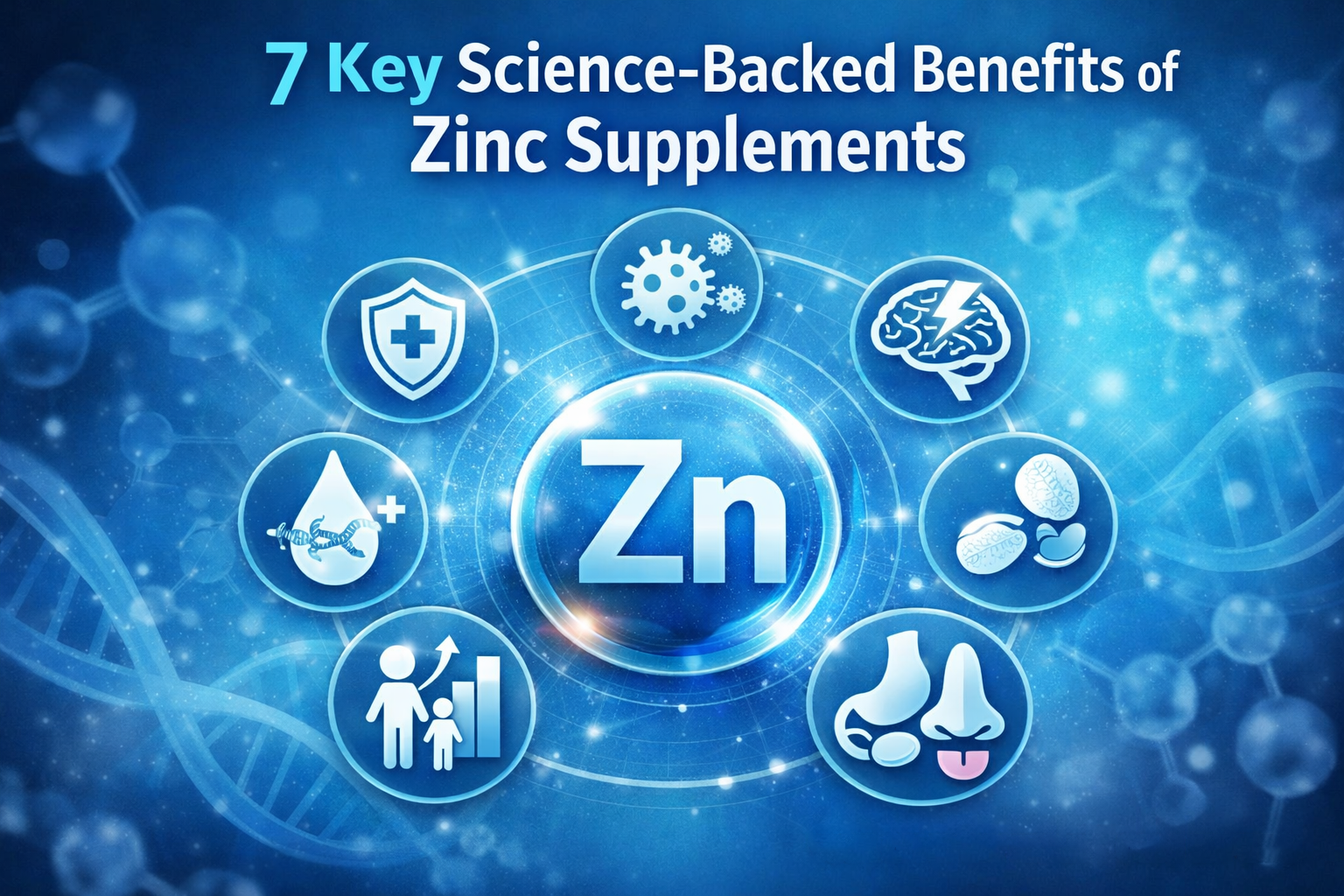
7 Science-Backed Benefits of Zinc Supplements
1. Boosts Immune Defense
Zinc is rightly known as a cornerstone of immune health.
- Cellular Defense: Zinc is essential for the normal development and function of T-lymphocytes and Natural Killer (NK) cells, which are frontline defenders that identify and eliminate pathogens.
- Barrier Support: It helps maintain the integrity of mucosal barriers in the respiratory tract and gut, a physical defense against invading pathogens.
- Evidence: A meta-analysis published in the Journal of Open Respiratory Medicine found that taking zinc lozenges within 24 hours of symptom onset can reduce the duration of the common cold by an average of 33%.
2. Promotes Skin Health & Wound Healing
Beyond topical skincare, zinc is an effective internal supplement for targeted skin management.
- Acne Management: Zinc possesses anti-inflammatory properties and helps regulate sebum production. Studies show that oral zinc supplements (like zinc gluconate) can significantly improve inflammatory acne.
- Wound Healing: As a necessary factor for collagen synthesis and cell division, zinc accelerates the repair process of skin and tissues.
3. Supports Cognitive Function & Mood Balance
The brain contains one of the highest concentrations of zinc in the body, and its balance directly impacts nerve function.
- Neurotransmission: Zinc is involved in regulating communication between neurons in the hippocampus, influencing learning and memory.
- Mood Balance: Research indicates that low zinc levels are associated with symptoms of depression and anxiety. Supplementing with zinc can serve as a supportive measure for emotional health.
4. Aids Growth, Development & Reproductive Health
Zinc plays a key role in growth and development at all life stages.
- Child Development: Zinc deficiency is a leading cause of growth retardation and developmental delays in children.
- Reproductive Health: For men, zinc is directly involved in testosterone synthesis and sperm production. Research indicates that zinc supplementation can improve sperm quality and count.
5. Provides Antioxidant & Anti-inflammatory Effects
While not a direct antioxidant, zinc is a core organizer of the body’s antioxidant defense system.
- Enzyme Activation: Zinc is a key component of the enzyme superoxide dismutase (SOD), one of the body’s most important antioxidant enzymes.
- Anti-inflammatory Action: By regulating inflammatory pathways like NF-kB, zinc helps manage chronic, low-grade inflammation.
6. Offers Digestive & Metabolic Support
Zinc is involved in every step from digestion to energy conversion.
- Core for Enzyme Activity: Over 50 digestive and metabolic enzymes require zinc to function properly.
- Thyroid Support: Zinc assists in converting the thyroid hormone T4 into the more active T3, supporting a healthy metabolism.
7. Supports Sensory Health (Taste & Smell)
An early sign of zinc deficiency can be a reduced sense of taste.
Zinc is crucial for producing a protein called gustin, which is essential for the proper functioning of taste buds.
Market Insights on Zinc Supplements
1. Market Growth Data
According to projections from multiple market research firms, the global zinc supplement market is set for sustained growth in the coming years. This growth is primarily driven by rising demand for immune health support, increased awareness of chronic disease prevention, and the trend towards personalized health management.
2. Consumer Trends
With growing health consciousness, consumers are increasingly leaning towards long-term supplementation as a preventive health investment. Zinc supplements have become a priority category for brand development due to their versatility, strong scientific backing, and high repeat purchase rate.
3. Segmentation Opportunities
- Formats: Gummies, Capsules, Tablets, Liquids
- Target Demographics: Seniors, Athletes, Vegetarians/Vegans, Children
- Combination Formulas: Zinc + Vitamin C, Zinc + Magnesium, Zinc + Vitamin D, etc.
Key Elements for Successfully Developing Zinc Supplements
Optimizing Bioavailability
Different forms of zinc (e.g., zinc citrate, zinc gluconate, zinc picolinate) vary significantly in absorption rates and have distinct advantages. Brands must consider absorption efficiency, gastrointestinal tolerance, and the needs of the target demographic when formulating products.
Formulation Innovation
Combining zinc with synergistic ingredients enhances product competitiveness. Key combinations include:
- Zinc + Vitamin C: For immune support
- Zinc + Magnesium: For exercise recovery and sleep support
- Zinc + Vitamin D: For immune and bone health
Quality and Safety
High-quality zinc supplements must adhere to strict standards, including premium raw material sourcing, GMP (Good Manufacturing Practice) production, and third-party testing/certifications (e.g., ISO, USP, NSF). This ensures product safety, stability, and full traceability.
How We Support Your Zinc Supplement Project
We are a supplement manufacturer with many years of experience, providing one-stop manufacturing services, including formulation consultation, prototype development, stability testing, compliant label design, large-scale production, and warehousing and logistics.
Whether it’s small-batch pilot production for market validation or large-scale production to meet growing demand, our flexible production lines can adapt to different capacity requirements. Through supply chain management and standardized production processes, we improve production efficiency and control costs while ensuring consistent product quality.
If you are considering launching a zinc supplement or expanding your product line, contact us today. We offer free consultation services to help you plan the entire process from market positioning and formulation design to the time-to-market.
Frequently Asked Questions (FAQ)
Q1: How long does it take to develop a zinc supplement?
A: It typically takes about 4-8 weeks from formulation design to small-batch trial production. Mass production and packaging cycles depend on order size.
Q2: What is the minimum order quantity (MOQ)?
A: The MOQ varies depending on the dosage form and packaging specifications. We can provide small-batch trial production solutions to reduce brand risk.
Q3: How do you ensure product differentiation?
A: We achieve product differentiation through unique formulations, patented excipients, innovative dosage forms (such as gummies or liquids), and differentiated marketing positioning.
Q4: What certifications and quality standards are available?
A: We support a range of international quality standards and certifications, including GMP production, ISO quality management, and third-party testing (such as USP/NSF). Our products undergo rigorous testing for purity, potency, and contaminants (heavy metals, microbes, pesticides). We also support allergen-free and clean-label certifications like gluten-free, non-GMO, vegan, halal, and kosher to meet different market requirements.
Q5: Who are zinc supplements suitable for?
A: Individuals needing immune support, people with skin problems, vegetarians, athletes, the elderly, and those with insufficient zinc intake.