Ashwagandha is no longer a niche adaptogen, yet U.S. sales are still rising. The next phase is being driven by new formats, compound formulas, recognizable extract brands, and a more careful approach to quality and claims.
Ashwagandha has been widely recognized in the U.S. supplement market for years, especially in stress and sleep products. Gummies helped move it beyond traditional herbal buyers. Even so, sales are still growing. These ashwagandha supplement market trends point to a category that is changing shape rather than repeating its first growth cycle.
SPINS data reported by Nutritional Outlook show that ashwagandha sales in the U.S. mainstream multioutlet channel grew 27% to $176 million during the 52 weeks ending November 30, 2025.3 That is a useful signal for brand owners: the opportunity is moving beyond simple awareness. Growth now depends on where the ingredient appears, what it is combined with, how the extract is specified, and how responsibly the finished product is positioned.
This article turns those market signals into practical questions for supplement brands planning an ashwagandha capsule, gummy, powder, tablet, or beverage.
What is ashwagandha, and why do consumers recognize it?
Ashwagandha is the common name for Withania somnifera, a botanical used in Ayurvedic medicine. In the U.S. market it is commonly described as an adaptogen, and commercial extracts are often standardized around withanolides, a group of naturally occurring compounds in the plant.1
Consumer recognition usually starts with a benefit rather than the botanical name. Stress management and sleep support are the two clearest entry points. Small, short-duration clinical trials suggest that some ashwagandha preparations may help with perceived stress, anxiety, or sleep, but the extracts, plant parts, doses, and study designs vary.2 Brands should therefore build product positioning around the evidence for the specific ingredient they use, not around the broadest possible list of benefits.
| What buyers already understandMany shoppers now connect ashwagandha with stress, calm, sleep, and mood. A product page does not need to retell the full history of Ayurveda before explaining what the formula is designed to do. |
The category is mature, but the sales curve is still moving
The 27% mainstream-channel growth figure matters because ashwagandha is not starting from a small base. It reached $176 million in that channel alone in the latest SPINS period reported by Nutritional Outlook.3 Nutritional Outlook and SPINS also selected it as one of their 2026 Ingredients to Watch.4
Most of the new activity extends beyond single-ingredient adaptogen capsules. Ashwagandha is appearing in more benefit-led formulas and in formats that fit different routines. Stress remains the anchor, but formulators are connecting it with restorative sleep, everyday energy, men’s health, physical performance, recovery, and drinkable wellness.
That shift changes the commercial question. Instead of asking whether consumers know ashwagandha, brand owners need to ask which use occasion gives their product a clear reason to exist.
Gummies helped make ashwagandha an everyday ingredient
Gummies reduced the distance between a traditional botanical and a familiar daily routine. Goli’s KSM-66 Ashwagandha gummies are a visible example of the format, with positioning around stress, relaxation, sleep quality, and other lifestyle benefits.5
For a brand, the lesson is broader than flavor. A gummy changes the audience, serving experience, packaging, stability work, and dose constraints. It can make an ingredient easier to try, but the formulation still has to deliver a consistent amount of active material through processing and shelf life.
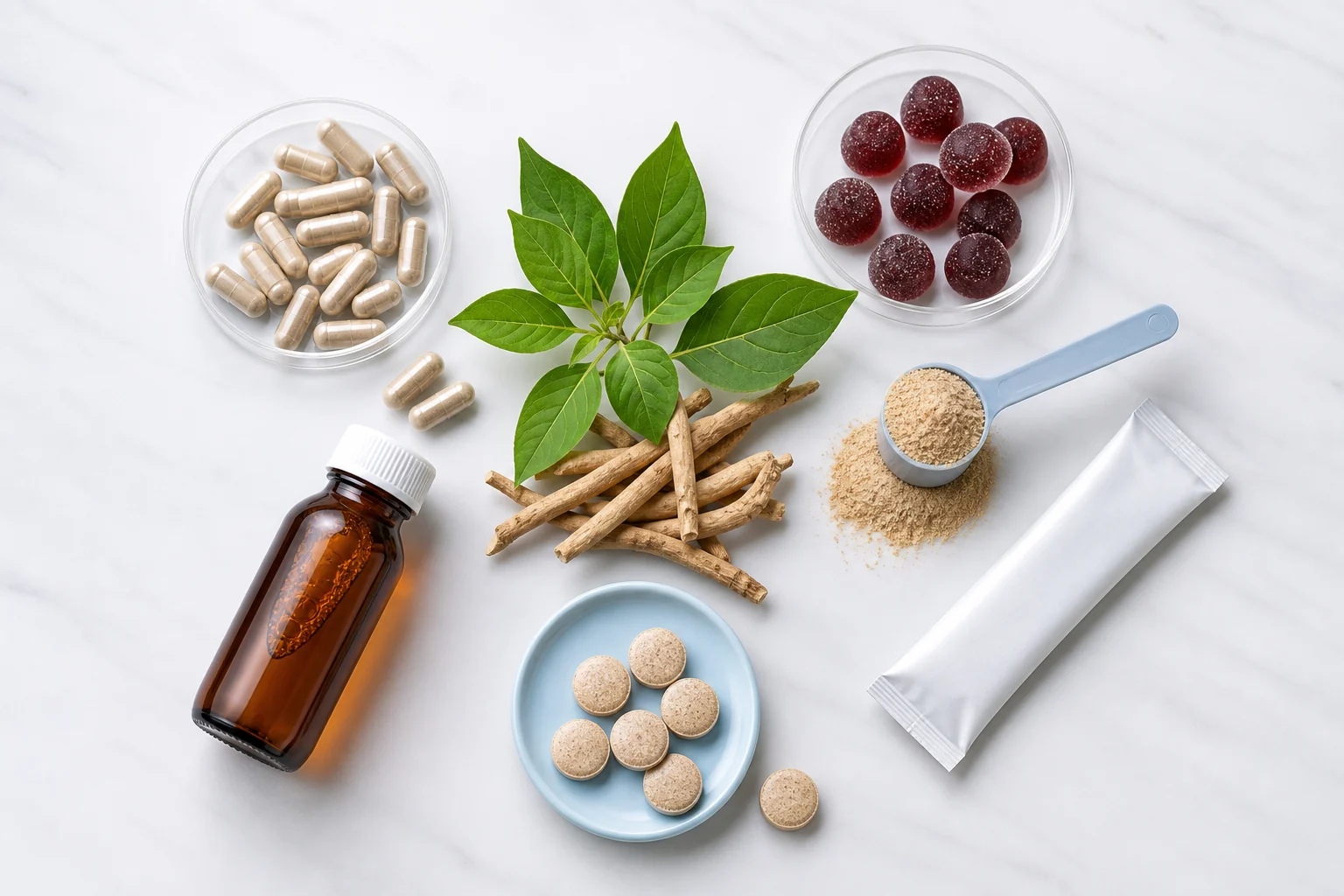
Capsules remain practical for higher active loads and simpler formulas. Powders, stick packs, chewables, and ready-to-drink products create other occasions. Nutritional Outlook notes that the format opportunity is tied to easier daily use, provided the product preserves its actives and delivers a reliable dose.4
Growth is shifting from single ingredients to compound formulas
Ashwagandha is increasingly used as one component in a wider formula. That makes sense in benefit-led categories where shoppers expect several ingredients to play different roles. The blend can also give a mature ingredient a more specific product story.
Stress and calm formulas
Nature Made Wellblends Calm Mind & Body combines Sensoril ashwagandha with magnesium and GABA.6 OLLY Ultra Strength Goodbye Stress softgels pair ashwagandha with GABA, L-theanine, and lemon balm.7 These products show two common formulation patterns: pairing ashwagandha with familiar calming ingredients, and placing it inside a clearly named benefit platform rather than presenting it as a stand-alone herb.
Sleep and melatonin-free formulas
Sleep products offer another route. AGZ, for example, is positioned as a melatonin-free nighttime formula that includes magnesium L-threonate, saffron, ashwagandha, L-theanine, valerian, and other ingredients.8 A useful sleep concept starts with the user’s problem, such as difficulty winding down, next-day grogginess concerns, or a preference for a melatonin-free routine. The formula can then be built around that specific use case.
Men’s health, energy, performance, and recovery
SPINS market commentary also points to wider use in men’s health, stress, and energy formulas.4 These categories can expand the addressable market, but each requires its own evidence review, dose logic, label language, and complementary ingredients. A formula should not collect every trending active into one serving. It should make a focused promise that the ingredient amounts and finished format can support.
Branded extracts are becoming a visible point of difference
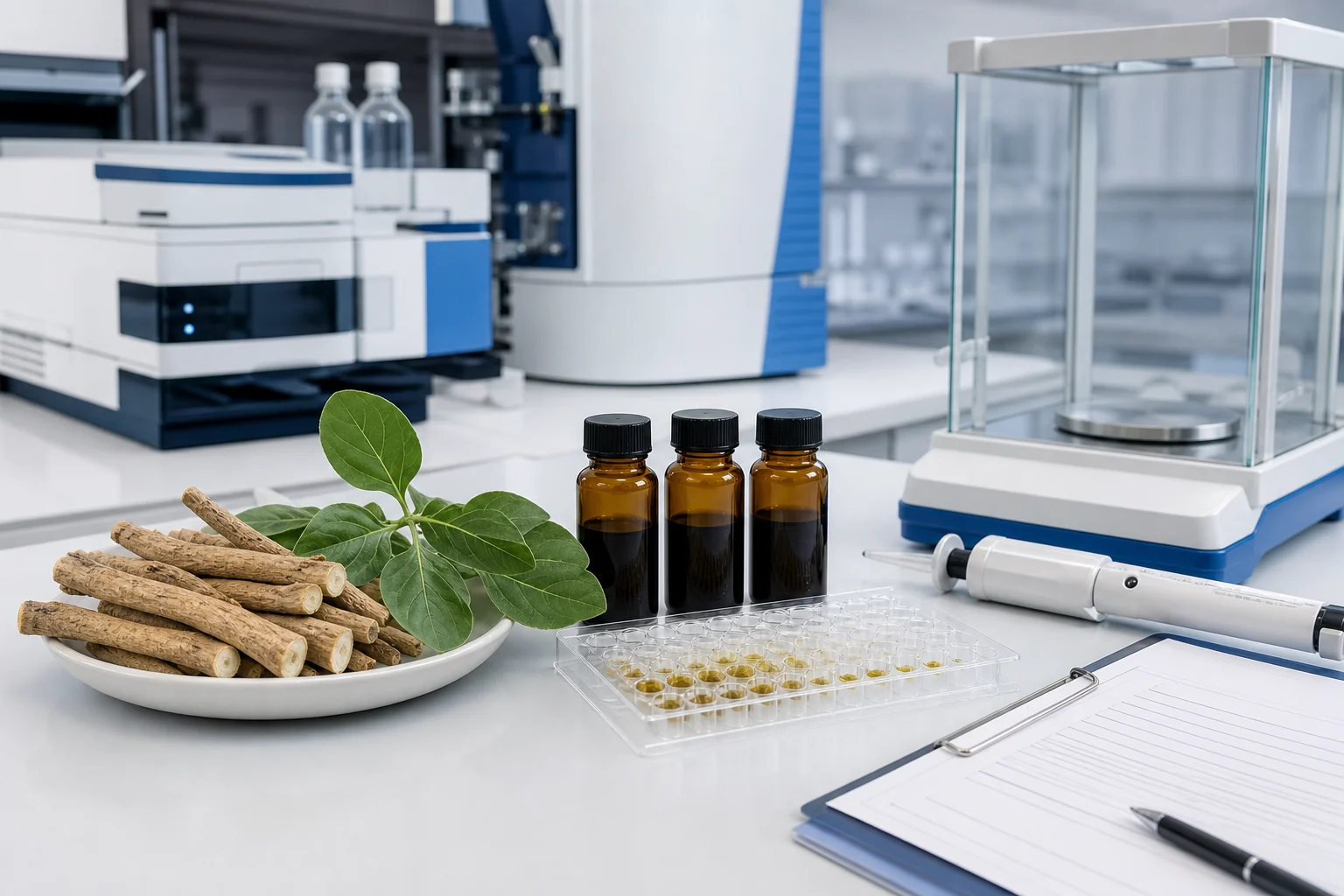
KSM-66, Sensoril, and Shoden are examples of branded ashwagandha extracts that shoppers and product developers may encounter. Their names are not interchangeable. Ashwagandha ingredients can differ by plant part, extraction process, chemical profile, standardization method, research program, and recommended use level.9
Nutritional Outlook’s 2026 coverage makes the same point: the category became more disciplined as brands paid closer attention to standardization, specifications, repeatable composition, and ingredient-specific research.4 The NIH fact sheet also notes that studies have used different preparations and doses, which makes it difficult to generalize results across every product labeled as ashwagandha.2
For brand owners, a recognizable extract can add a research story and a quality signal. It can also affect formula cost, serving size, sourcing, trademark permissions, label copy, and claim substantiation. Choose it from the product and market requirements. The front-panel logo comes later.
What to specify before requesting a manufacturing quote
A useful request for quotation gives the manufacturer enough information to assess feasibility. Before sending a brief, decide the following:
- Target benefit and audience: stress, calm, sleep, performance, men’s health, or another defined use case.
- Dosage form: capsule, tablet, gummy, powder, softgel, or liquid, with the expected serving size.
- Ingredient identity: root only or root-and-leaf extract, generic or branded, extraction method, and required standardization.
- Dose and formula partners: target ashwagandha amount and any magnesium, GABA, L-theanine, saffron, or other complementary ingredients.
- Sensory requirements: flavor, sweetness, color, texture, odor masking, and dietary preferences for gummies, powders, or liquids.
- Quality documentation: specifications, identity testing, contaminants, microbiology, potency, stability, and finished-product release criteria.
- Target market: U.S. only or additional countries, because ingredient acceptance and label requirements can differ.
- Commercial limits: desired MOQ, target cost, packaging format, launch timing, and whether the project is private label or custom formulation.
Regulatory acceptance is not the same in every market

The U.S. dietary supplement market continues to use ashwagandha widely, but other markets take a more cautious approach. Denmark’s food authority states that products containing ashwagandha are illegal to sell as foods in Denmark, based on its risk assessment.10 ANSES in France has advised several sensitive groups to avoid supplements containing Withania somnifera, including pregnant women and people with certain thyroid, liver, cardiac, or hormonal conditions. It also urges caution with some medications.11
The NIH notes that short-term use appears generally well tolerated in studies, while long-term safety remains uncertain. It also discusses reports involving liver injury, possible thyroid effects, medication interactions, and cautions for pregnancy, breastfeeding, and some other populations.12
The practical response is to review the formula, intended market, label claims, warning language, and supporting documentation together. A product built for U.S. distribution may need changes before it enters Europe or another market.
| Compliance noteThis article is for product-development and market-planning purposes. It is not medical advice or a substitute for legal, regulatory, or qualified scientific review of a specific product. |
Where the next opportunity is likely to come from
Ashwagandha’s next phase will probably be less about discovering the ingredient and more about using it with greater precision. A viable concept needs a recognizable consumer need, a suitable format, a defensible extract and dose, and a realistic target market.
That could mean a straightforward stress capsule, a carefully dosed gummy, a melatonin-free nighttime powder, a men’s health blend, or a ready-to-drink concept. Format only works when the product has a clear reason to be chosen over the many ashwagandha options already on the shelf.
Build an ashwagandha product around a real use case
Ekang Nutra supports private label and custom supplement projects across capsules, tablets, powders, gummies, softgels, and liquids. Its services include formulation development, ingredient sourcing, manufacturing, packaging, labeling support, and fulfillment.13
If you are evaluating an ashwagandha launch, send the team your target market, dosage form, formula idea, expected order quantity, packaging preference, and launch timing. A focused brief makes it easier to compare ingredient options, identify technical constraints, and develop a quote that fits the product you actually want to sell.
| Planning an ashwagandha supplement?Share your target format, formula, and market with Ekang Nutra to start a manufacturing discussion.Request a quote |
References
1 NIH Office of Dietary Supplements. Ashwagandha: Fact Sheet for Health Professionals. Botanical identity, traditional use, adaptogen context, and withanolides. https://ods.od.nih.gov/factsheets/Ashwagandha-HealthProfessional/
2 NIH Office of Dietary Supplements. Ashwagandha: Fact Sheet for Health Professionals. Evidence summary for stress, anxiety, sleep, preparations, and doses. https://ods.od.nih.gov/factsheets/Ashwagandha-HealthProfessional/
3 Nutritional Outlook. “Ashwagandha’s advancement.” SPINS data for the 52 weeks ending November 30, 2025: 27% growth in the mainstream MULO channel to $176 million. https://www.nutritionaloutlook.com/view/ashwagandha-s-advancement-the-ingredient-is-seeing-greater-adoption-by-manufacturers-due-to-its-many-potential-benefits-and-consumer-recognition
4 Nutritional Outlook and SPINS. “2026 Ingredients to Watch” and related ashwagandha coverage. Market expansion, formulation, format, and standardization commentary. https://www.nutritionaloutlook.com/view/2026-ingredients-to-watch-top-ingredients-and-trends-driving-nutraceutical-product-development
5 Goli. Goli Ashwagandha Gummies with KSM-66. Product format and positioning. https://health.goli.com/pages/goli-ashwagandha
6 Nature Made. Wellblends Calm Mind & Body Gummies. Sensoril ashwagandha, magnesium, and GABA formula. https://www.naturemade.com/products/wellblends-calm-mind-body-gummies
7 Target. OLLY Ultra Strength Goodbye Stress Softgels. Ashwagandha, GABA, L-theanine, and lemon balm formula. https://www.target.com/p/-/A-78296936
8 AG1. AGZ Ingredients. Melatonin-free sleep formula containing magnesium L-threonate, saffron, ashwagandha, L-theanine, valerian, and other ingredients. https://drinkag1.com/sleep/agz-ingredients
9 NIH Office of Dietary Supplements. Ashwagandha fact sheet. Examples of extract-specific preparations used in studies, including KSM-66 and Shoden. https://ods.od.nih.gov/factsheets/Ashwagandha-HealthProfessional/
10 Danish Veterinary and Food Administration. Ashwagandha in food supplements and beverages. Danish market restriction. https://foedevarestyrelsen.dk/kost-og-foedevarer/alt-om-mad/kemi-i-maden/mad-med-uoensket-kemi/ashwagandha
11 ANSES. Nutrivigilance 2024 activity report. Withania somnifera risk assessment and recommendations for sensitive populations. https://www.anses.fr/fr/system/files/Anses-RA2024-Nutrivigilance.pdf
12 NIH Office of Dietary Supplements. Ashwagandha safety, long-term uncertainty, liver and thyroid concerns, interactions, and sensitive populations. https://ods.od.nih.gov/factsheets/Ashwagandha-HealthProfessional/
13 Ekang Nutra. Private Label Supplement Manufacturing and company service pages. Manufacturing formats and project support. https://ekangnutra.com/products/private-label/