Most supplement brands don’t set out to work with five different vendors. It usually happens gradually — a formulator here, a bottling facility there, a separate label printer, a third-party lab for testing, and a fulfillment company to actually get orders out the door. Each individual choice made sense at the time. The problem shows up later, when a label typo needs fixing and nobody’s sure which vendor owns the correction, or when a formula tweak at the manufacturer means the packaging specs no longer match what the label printer already produced.
None of these are dramatic failures. They’re small, ordinary friction points. But they compound — and for a growing brand, that compounding cost is often bigger than people expect going in.
Where the Coordination Cost Actually Shows Up
Timeline risk multiplies with every handoff. A delay at any single vendor in the chain — a raw material shortage at the formulator, a backlog at the bottling facility, a scheduling conflict at the label printer — pushes back everyone downstream of it. With five vendors, you have five independent points of failure instead of one.
Accountability gets fuzzy exactly when you need it most. If a finished product doesn’t match spec, is it a formulation issue, a production issue, or a packaging issue? When those functions live at different companies, figuring out where something actually went wrong — and who’s responsible for fixing it — takes longer than the fix itself often does.
Communication becomes its own part-time job. Every vendor change (a new flavor, an updated label, a different bottle size) has to be separately communicated to every affected party, in the right order, with the right lead time. For a small team, this can quietly consume more hours than actually running the business.
What Actually Changes When Production Sits Under One Roof
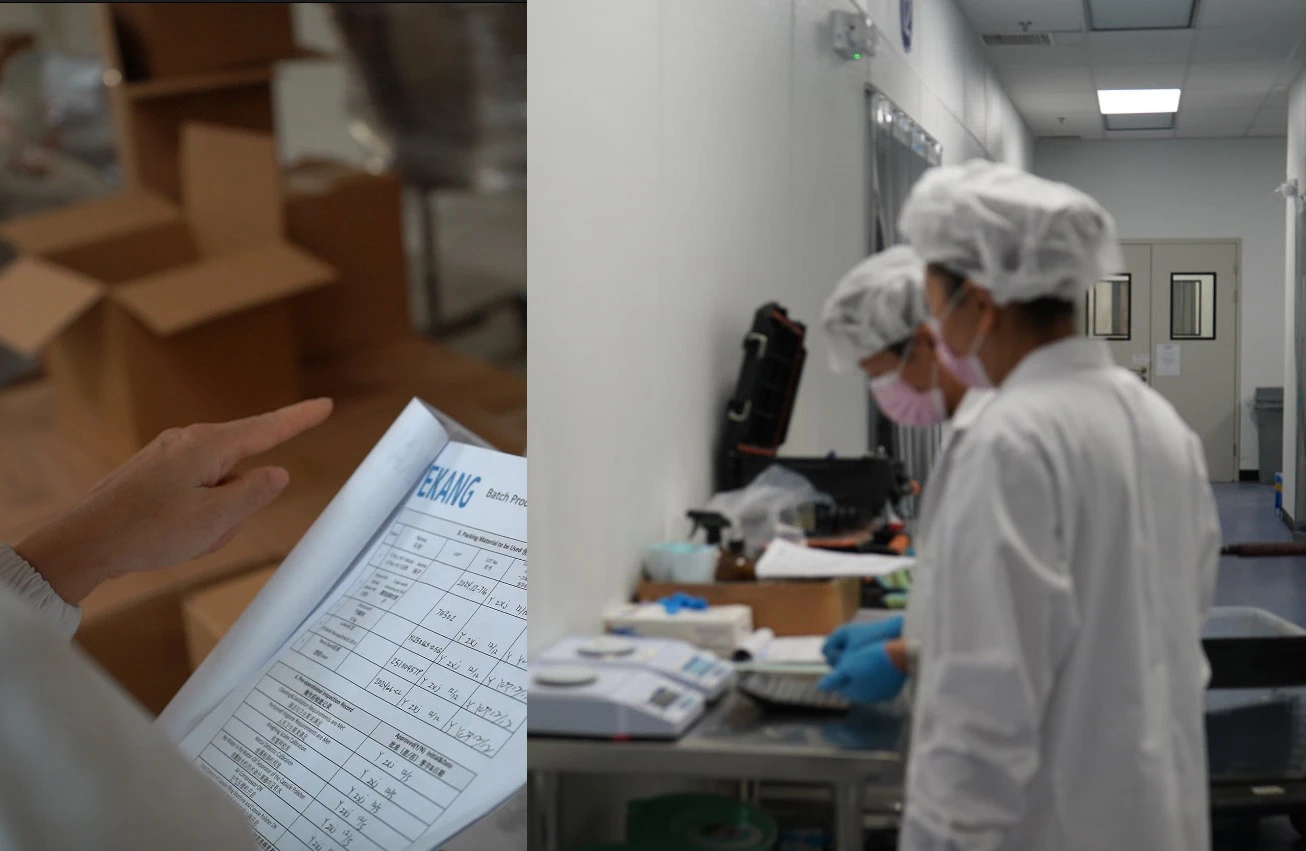
When formulation, production, testing, and packaging happen at the same facility, most of the coordination cost above simply doesn’t exist — not because anyone’s working harder, but because the handoffs that create the risk aren’t there in the first place.
A formula adjustment doesn’t require re-briefing a separate packaging vendor, because the same team handles both. A quality question doesn’t require tracking down which of three companies is responsible, because there’s one point of accountability for the finished product. A label correction can be caught and resolved internally instead of triggering a multi-vendor email chain.
This is the practical case for working with a full-service supplement manufacturer — not as a nice-to-have, but as a way to remove entire categories of risk that have nothing to do with product quality and everything to do with logistics.
Currently juggling more vendors than you’d like? If you’re spending more time coordinating suppliers than building your brand, it might be worth a conversation about what consolidating under one manufacturing partner would actually look like for your specific setup. Talk to our team →
What “Full-Service” Should Actually Include
Not every manufacturer that calls itself “full-service” offers the same scope. Worth confirming before you commit:
- Formulation — private label (existing formulas) and custom formulation (built from scratch), so you’re not locked into one path
- In-house production — not just assembly of components sourced elsewhere
- Raw material testing — identity, potency, and contaminant testing on incoming materials, not just a supplier’s paperwork taken at face value
- Packaging and labeling — bulk, primary, and secondary packaging under the same compliance umbrella as production
- Label design support — so a formula change doesn’t require restarting a separate design process elsewhere
- Fulfillment — order storage, pick-pack-ship capability, so your product doesn’t need to change hands again after it leaves the production floor
The more of this list a single partner genuinely covers, the fewer vendor relationships you have to manage — and the fewer places for something to fall through the cracks.
What This Looks Like at Ekang Nutra
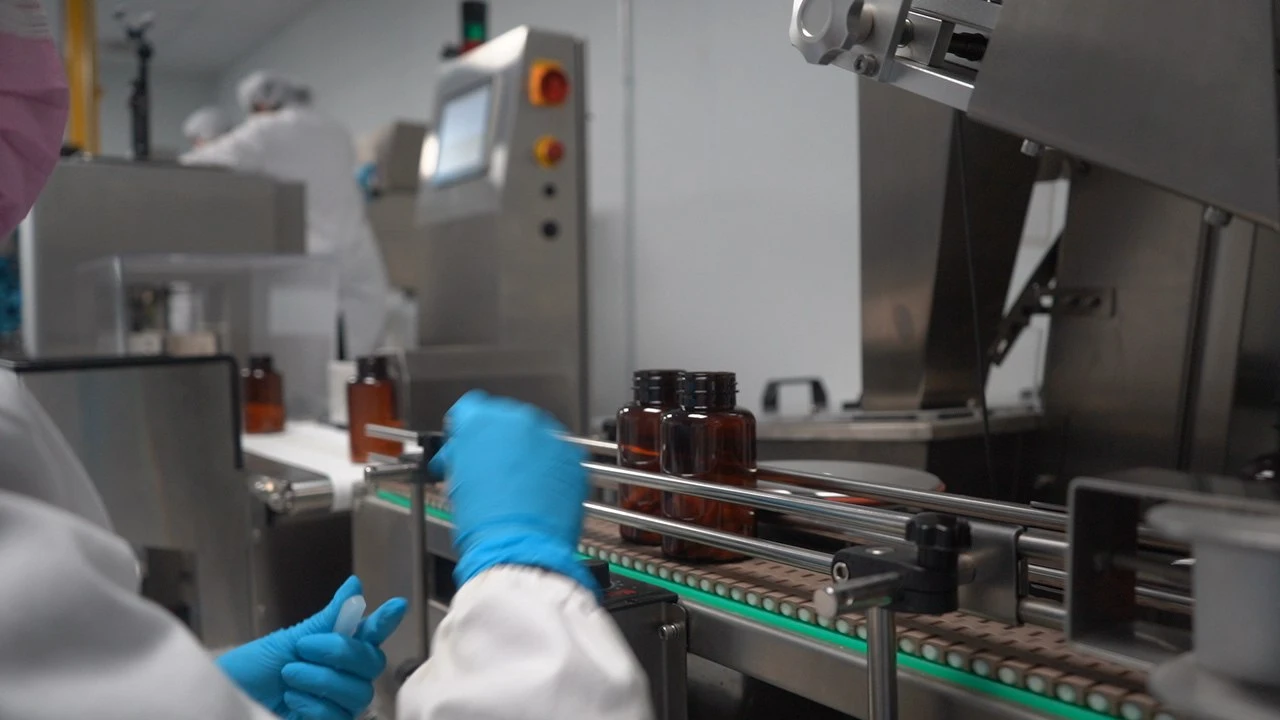
Our 13,000 sq. ft. California facility is FDA-registered and independently cGMP-certified by Eurofins Healthcare Assurance (accredited by ANAB under ISO/IEC 17065), covering formulation, capsule and powder production, tablet packaging and labeling, raw material identity and potency testing, label design, and fulfillment — under one team, one facility, and one point of contact. Once raw materials and packaging arrive, production typically completes within 4–8 weeks.
If you’re evaluating whether to consolidate your supplement supply chain, we’re happy to walk through what that would look like for your specific product line — no obligation. Request a free consultation →
Use up and down arrow keys to resize the meta box pane.
Use up and down arrow keys to resize the meta box pane.