NMN (nicotinamide mononucleotide) has become one of the most talked-about ingredients in the longevity and healthy-aging supplement category — but it’s also one of the most hyped, which makes it worth separating what’s actually been studied in humans from what’s still marketing language. Here’s a clear, current look at the research as of 2026.
What NMN Actually Does in the Body
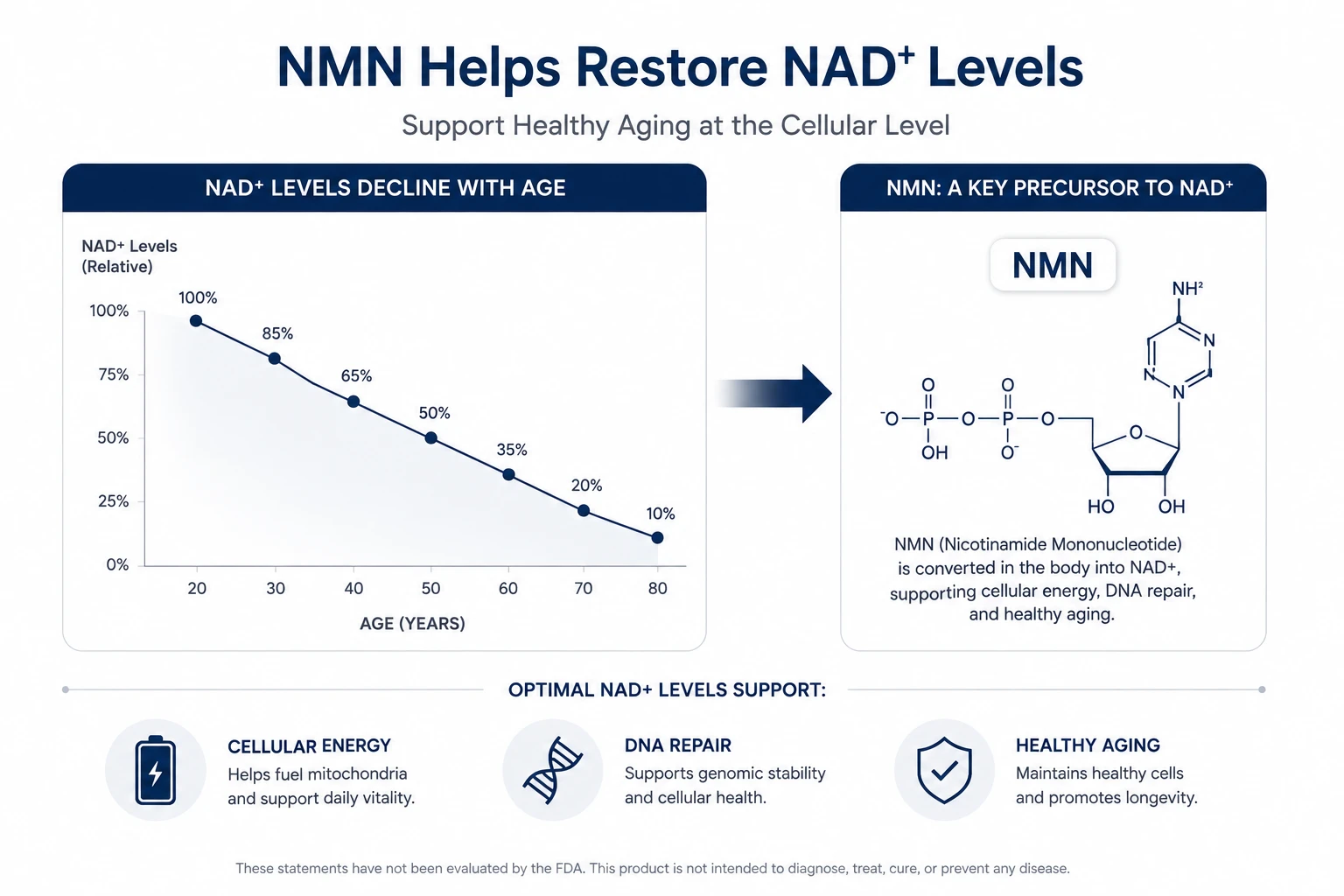
NMN is a precursor to NAD+ (nicotinamide adenine dinucleotide), a coenzyme found in every cell in the body that plays a central role in energy metabolism — essentially helping cells convert nutrients into usable energy. NAD+ levels are well-documented to decline with age, in some research by as much as 80% over a lifetime, which is the core reason NMN and other “NAD+ boosters” have drawn so much research and consumer interest.
The logic is straightforward: if NAD+ decline is linked to aging-related changes in energy, metabolism, and cellular repair, then a compound that helps restore NAD+ levels might help support healthy aging. That’s the hypothesis. What matters is how much of it actually holds up in human studies.
What the Human Research Shows So Far
The clearest, most consistently replicated finding: oral NMN reliably and measurably increases blood NAD+ levels in humans, in a dose-dependent way, across multiple clinical trials. This part of the story is well established — NMN does what it’s supposed to do at the biochemical level.
Beyond that, the picture gets more nuanced. A 2026 research review summarized it well: early human trials primarily support safety and tolerability, with “preliminary” — not definitive — efficacy signals. Most individual studies are small and short-term. Some specific findings worth knowing about:
- One clinical trial found NMN supplementation was associated with improved sleep quality in middle-aged and older adults
- Another study found NMN reduced blood triglyceride levels in healthy individuals
- Some research has observed effects related to walking speed and certain muscle-related parameters in older adults
- Multiple trials — running from a few weeks up to two years — have consistently found oral NMN and related NAD+ precursors to be safe and well tolerated at studied doses
What the research does not yet clearly show is that NMN reliably “reverses aging” or prevents specific age-related diseases in humans — those effects are seen more consistently in animal studies, and researchers are careful to note that findings in mice don’t automatically translate to people. If you see marketing claims promising dramatic anti-aging transformation, that’s outpacing where the actual human evidence currently stands.
Who Seems to Benefit Most, Based on Current Research
An important nuance from the research: NAD+-boosting supplements like NMN appear to show the most measurable benefit in people who start with lower baseline NAD+ levels — which tends to correlate with older age. People with already-healthy NAD+ status may see less added benefit from supplementation. This is a useful, honest expectation-setter: NMN research to date suggests it’s more likely to matter for supporting healthy aging in older adults than delivering a dramatic effect in someone who’s already young and healthy.
Is NMN Legal? A Quick Regulatory Note
If you’ve researched NMN before, you may have seen conflicting information about whether it’s a legal dietary supplement in the U.S. — and that confusion is understandable. The FDA excluded NMN from the dietary supplement category in 2022, then reversed that decision in September 2025, confirming NMN can legally be marketed as a dietary supplement. As of 2026, NMN supplements are legal in the U.S., though given the reversal, it’s reasonable to expect this ingredient to stay under regulatory attention going forward.
What to Look For in a Quality NMN Supplement
This is arguably more important than any single research finding: independent testing of commercial NMN products has found real-world quality problems, with some products’ actual NMN content deviating from their label claims by as much as +28.6% to -100% — meaning some tested products contained little to no detectable NMN at all, despite what the label promised.
A few practical things to look for:
- Third-party or manufacturer-verified purity testing — not just a supplier’s paperwork, but actual identity and potency verification
- A specific, standardized dose disclosed on the label — most studied doses in human trials have ranged from roughly 100 mg to 1,250 mg per day; vague or unusually high unverified doses are a caution flag
- A manufacturer that’s transparent about sourcing and testing practices — if a brand can’t or won’t explain how they verify what’s actually in the product, that’s worth taking seriously
As always, talk to a healthcare provider before starting any new supplement, particularly if you take medications or have an existing health condition.
These statements have not been evaluated by the Food and Drug Administration. This product is not intended to diagnose, treat, cure, or prevent any disease.
Ekang Nutra is a California-based, FDA-registered, cGMP-certified dietary supplement manufacturer, independently certified by Eurofins Healthcare Assurance. We manufacture NMN and other supplement products with full raw material identity and potency testing on every incoming lot.