Few ingredients in the supplement industry have had as volatile a regulatory path as the NMN supplement category — and for brand owners considering it, understanding that history isn’t optional. It directly affects what you can claim, how confident you can be in long-term availability, and why raw material quality control matters more here than almost anywhere else in the category.
The Regulatory Story Brand Owners Need to Understand
In November 2022, the FDA excluded NMN from the legal definition of a dietary supplement, citing the “drug preclusion clause” — a rule that blocks an ingredient from being sold as a supplement if it was first authorized for investigation as a new drug. NMN had been the subject of an Investigational New Drug (IND) application (MIB-626), which triggered the exclusion. This effectively pulled NMN supplements out of legal sale in the U.S. for several years, even as many products continued shipping in a gray-market state.
That changed on September 29, 2025, when the FDA reversed its position, concluding that sufficient evidence showed NMN had been marketed as a dietary supplement before it was authorized for drug investigation — meaning it wasn’t legally excluded after all. By December 2025, the FDA had sent formal letters to companies confirming their previously submitted New Dietary Ingredient (NDI) notifications were reinstated.
As of 2026, NMN is legally marketable as a dietary supplement in the U.S. But brand owners should treat this as an active regulatory area rather than settled law — the ingredient has already flipped status once, industry advocacy groups are pushing for a legislative fix to prevent future reversals, and any brand building an NMN line should keep a relationship with a manufacturer who tracks this closely, not one who formulated the product once and moved on.
Why NMN Demand Keeps Growing Anyway
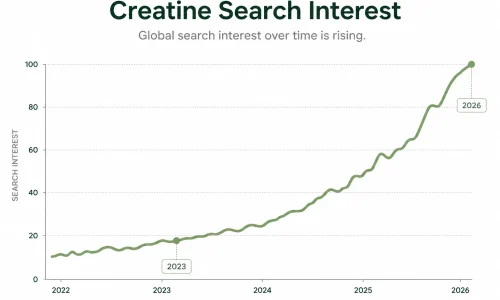
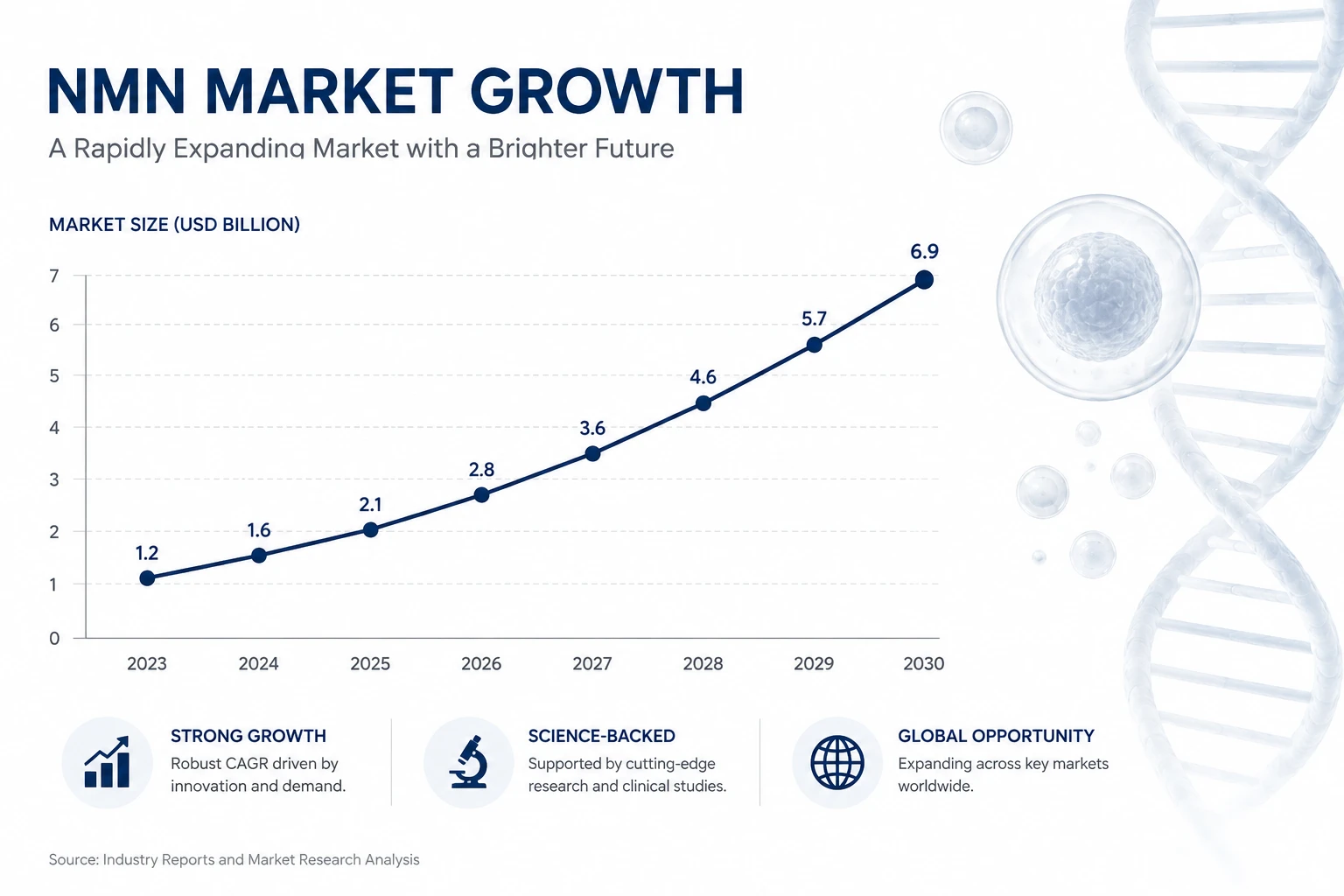
Even through the exclusion period, consumer interest in NMN barely slowed. Market estimates for 2026 vary significantly depending on methodology — from roughly $400 million to over $700 million globally — but nearly every forecast agrees on double-digit annual growth (estimates commonly range from 10% to over 20% CAGR) through the early 2030s. The demand driver is consistent across reports: NMN is positioned as a precursor to NAD+, a coenzyme involved in cellular energy metabolism that naturally declines with age, and it’s become one of the anchor ingredients in the broader “longevity” and cellular-health supplement trend.
The Quality Problem That Makes This Category Different
Here’s what makes NMN a genuinely higher-stakes formulation category than most other ingredients: independent testing of commercial NMN products has found active ingredient levels deviating from label claims by as much as +28.6% to -100% — meaning some products tested contained little to no detectable NMN at all, despite claiming a specific dose on the label. This isn’t a minor quality variance; it’s a category with a documented, serious mislabeling problem.
For brand owners, this changes the calculus on manufacturer selection. A supplier that doesn’t rigorously verify raw material identity and potency on every incoming lot isn’t just risking an inconsistent product — in this category, they’re risking a product that may not contain meaningful NMN at all.
What to Look For in an NMN Manufacturing Partner
Verified raw material sourcing and identity testing. Given the documented mislabeling problem in this category, ask specifically how your manufacturer verifies NMN purity and concentration on incoming raw material — not just whether they have a supplier’s Certificate of Analysis, but whether they run independent identity and potency testing themselves.
Regulatory awareness, not just formulation capability. Given NMN’s reversal history, a manufacturer that can speak knowledgeably about current NDI notification status and labeling requirements is a meaningfully safer partner than one treating it like any other ingredient.
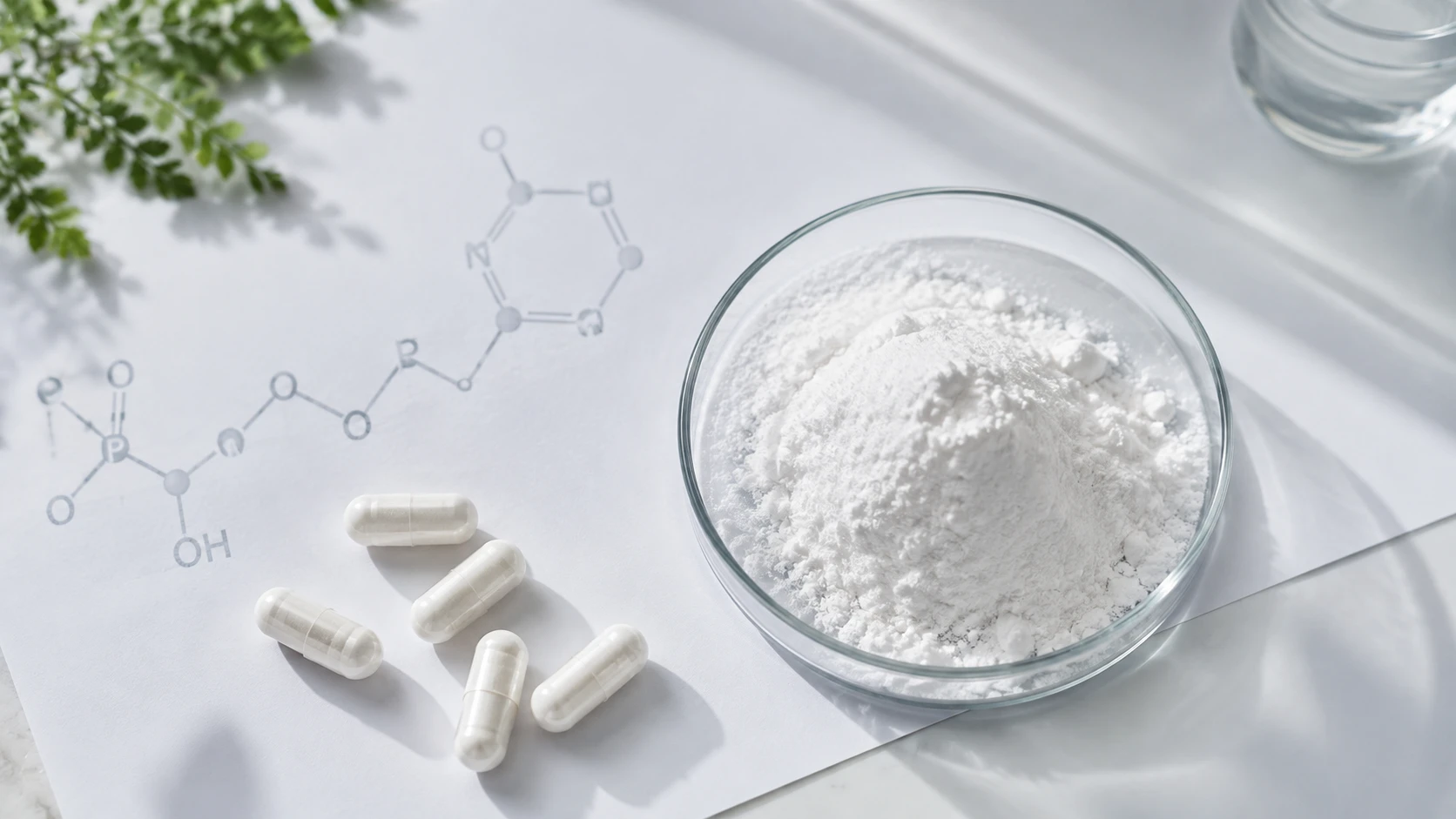
Format. Capsules are the dominant and fastest-growing format for NMN specifically, offering the dosing precision that matters given the category’s quality control challenges. Powder is also common, particularly for combination longevity formulas.

Private Label vs. Custom NMN Formulation
A standalone, verified-potency NMN capsule is a viable private label option for brands entering the longevity category, though differentiation is harder here than in more established categories — quality verification and transparent third-party testing are likely to matter more to informed buyers than branding alone, given how public the industry’s quality problems have been.
Custom formulation is common in this category — NMN is frequently paired with other NAD+-supporting or longevity-positioned ingredients (such as resveratrol or TMG) into a broader cellular-health stack, where the combination and dosing strategy become the actual differentiator.
Formulating NMN With a Verified Partner
Ekang Nutra is a California-based, FDA-registered, cGMP-certified (independently certified by Eurofins Healthcare Assurance, accredited by ANAB under ISO/IEC 17065) dietary supplement manufacturer. We manufacture NMN products in hard capsules and powders, with full raw material identity and potency testing on every incoming lot — a standard that matters more in this category than almost any other.
Ready to formulate your NMN product? Contact our team for a free consultation and current regulatory guidance.