Creatine has an image problem — for the industry, that is. Ask the average American what creatine is for, and most will say “bodybuilding.” That perception is now badly out of date, and it’s costing brands a much bigger opportunity than they realize.
The Numbers: Creatine Grew Faster Than Any Other Supplement in 2025
ConsumerLab’s 2026 survey of over 8,850 supplement users found that creatine posted the single largest gain in popularity of any of the 200 most-used supplements tracked — up 17.1 percentage points in one year, more than triple the growth of the next-fastest-growing ingredient, magnesium.
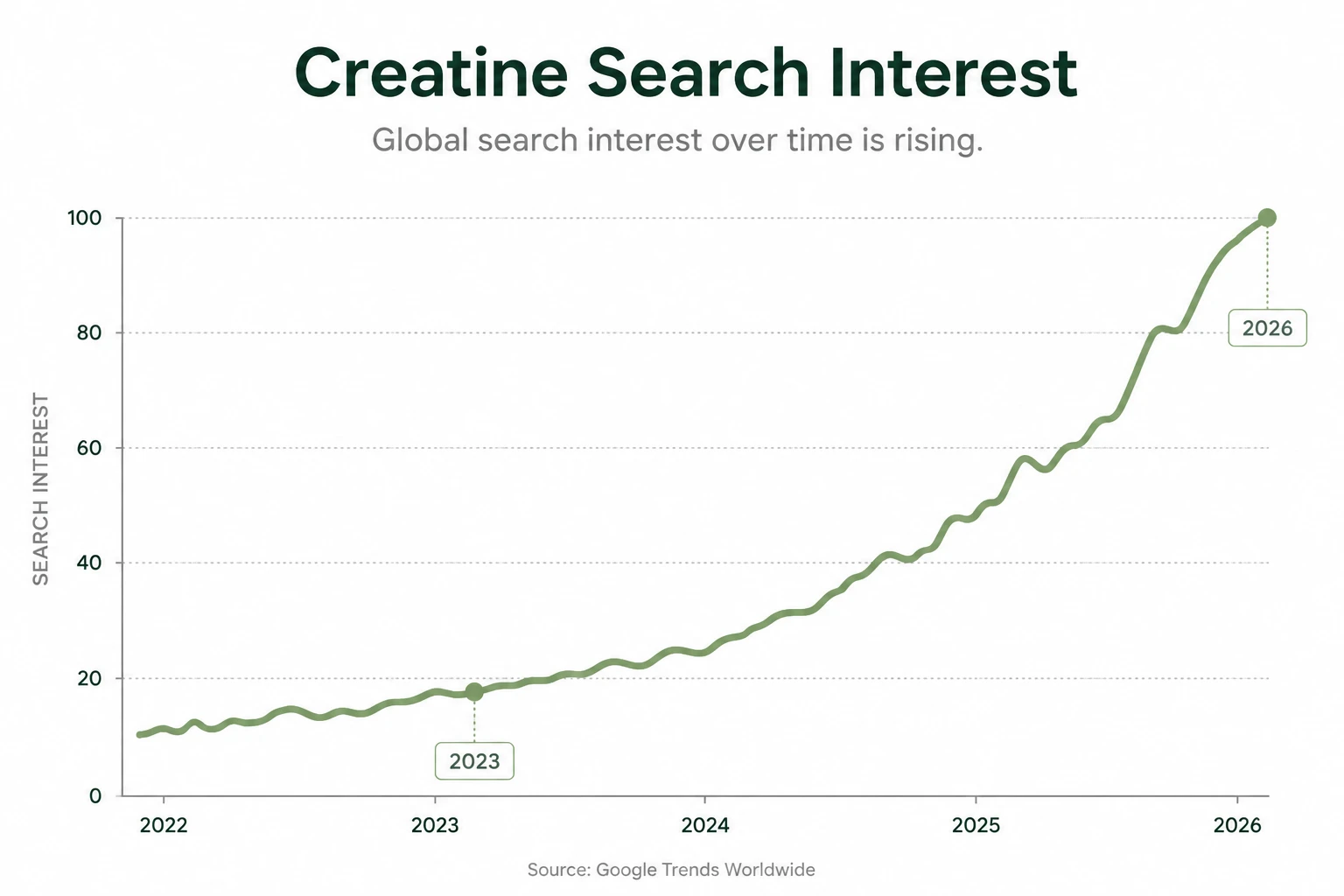
This isn’t a niche fitness-industry statistic. Search and retail data confirm the same shift is happening at scale: Google Trends shows roughly a 4x increase in creatine-related search interest since 2023, and the global creatine supplements market — valued at around $1.1 billion in 2024 — is projected to grow at a CAGR near 20-25% through 2030 across multiple market research estimates.
From Athletes to Everyone: Creatine’s Second Curve
What’s driving this isn’t a bigger gym-going population — it’s creatine breaking out of the fitness aisle entirely. Industry analysts covering 2026 trends specifically describe creatine’s “comeback” as a story of expanding audience: menopausal women, everyday fitness enthusiasts, and people simply looking for more mental energy are now among its fastest-growing user groups.
Three markets stand out as the most underexploited by current brands:
1. Healthy Aging & Muscle Preservation
As sarcopenia (age-related muscle loss) awareness grows, creatine is increasingly positioned alongside protein and vitamin D as a core tool for preserving strength and mobility later in life — a natural fit for the “healthy aging” consumer segment that’s expanding across the entire supplement industry in 2026.
2. Cognitive & Mental Energy (“Brainergy”)
Because creatine helps replenish ATP — the body’s core energy currency — and the brain consumes roughly 20% of the body’s energy despite being only 2% of its mass, researchers and formulators are exploring creatine’s role in mental stamina and focus. Industry insiders have started calling this the “brainergy” trend, and it’s expected to be one of the more commercially interesting creatine narratives through 2026 and beyond.
3. Women’s Health
“Creatine for Women” has emerged as one of the fastest-growing search terms in the category, up over 120% year-over-year, with interest centered on strength, bone health, and cognitive support — not aesthetics or bodybuilding. This is a distinct market requiring its own messaging, packaging, and formulation approach.

The Format Opportunity: Solving the Powder Problem Without Gummies
Creatine has traditionally been sold almost exclusively as an unflavored powder — functional, but a barrier for many mainstream consumers who don’t want to mix a scoop into water every day. Industry reporting on 2026 supplement trends notes that gummies are the fastest-growing delivery format overall (CAGR of roughly 8.1%), largely because they solve exactly this convenience problem. But gummies come with real trade-offs for creatine specifically: creatine requires a relatively large daily dose, which is hard to fit into a standard gummy without stacking six or more pieces, and most gummy formats add meaningful sugar to get there.
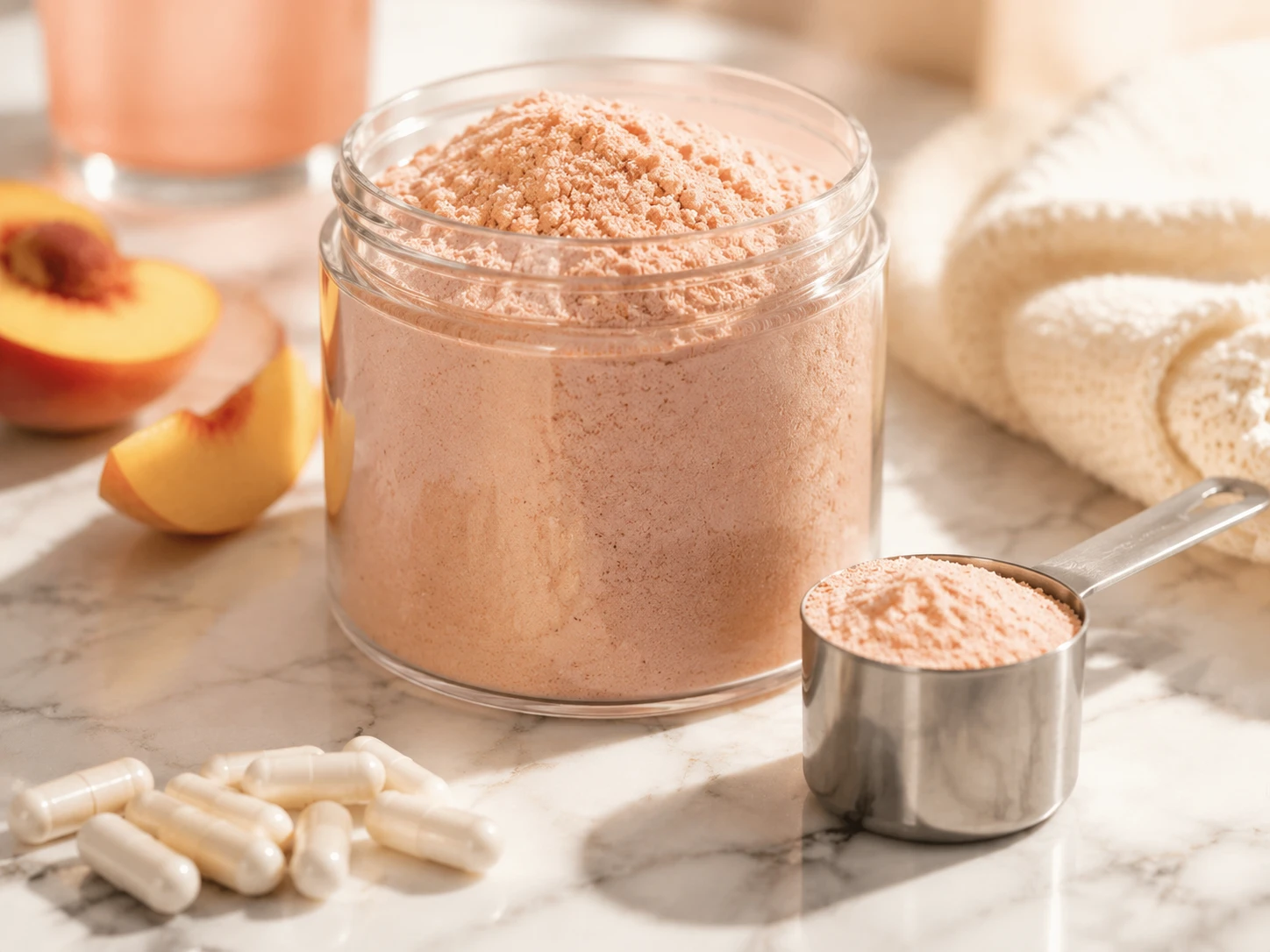
This is actually where flavored powder and precisely dosed capsule or tablet formats have a real edge. A well-formulated flavored creatine powder (mixed into a stick pack or sachet) delivers a full, accurate clinical dose without the sugar load of a gummy equivalent, while capsules and tablets solve the “no mixing required” convenience problem for on-the-go consumers. Brands that lean into this — full dose, no compromise, better taste — have a genuine formulation edge over the growing pile of underdosed gummy competitors.
The B2B Opportunity: Differentiating in a Crowding Category
As more brands wake up to creatine’s growth, competition on price and generic monohydrate formulas will intensify. The differentiation opportunities for OEM/ODM partners in 2026 include:
- Functional stacking — combining creatine with magnesium, taurine, or electrolytes for recovery- or hydration-positioned products
- Audience-specific formulation — women’s formulas, 50+ healthy-aging formulas, and cognitive-focused formulas each require distinct dosing, flavor, and packaging strategy
- Clean-label, additive-free formulations — as consumer scrutiny of ingredient lists increases across the supplement category broadly
- Format innovation — great-tasting flavored powder sachets, dissolvable stick packs, and easy-to-swallow capsule or tablet formats that solve the “chalky powder” objection without the sugar and dosing limits of gummies
Considering a creatine line that goes beyond the gym-bro shelf? We formulate audience-specific creatine products — from women’s health stacks to healthy-aging blends to great-tasting flavored powders and precisely dosed capsules or tablets — manufactured under our California food manufacturing license, cGMP certification, and FDA-registered facility, with flexible MOQs.