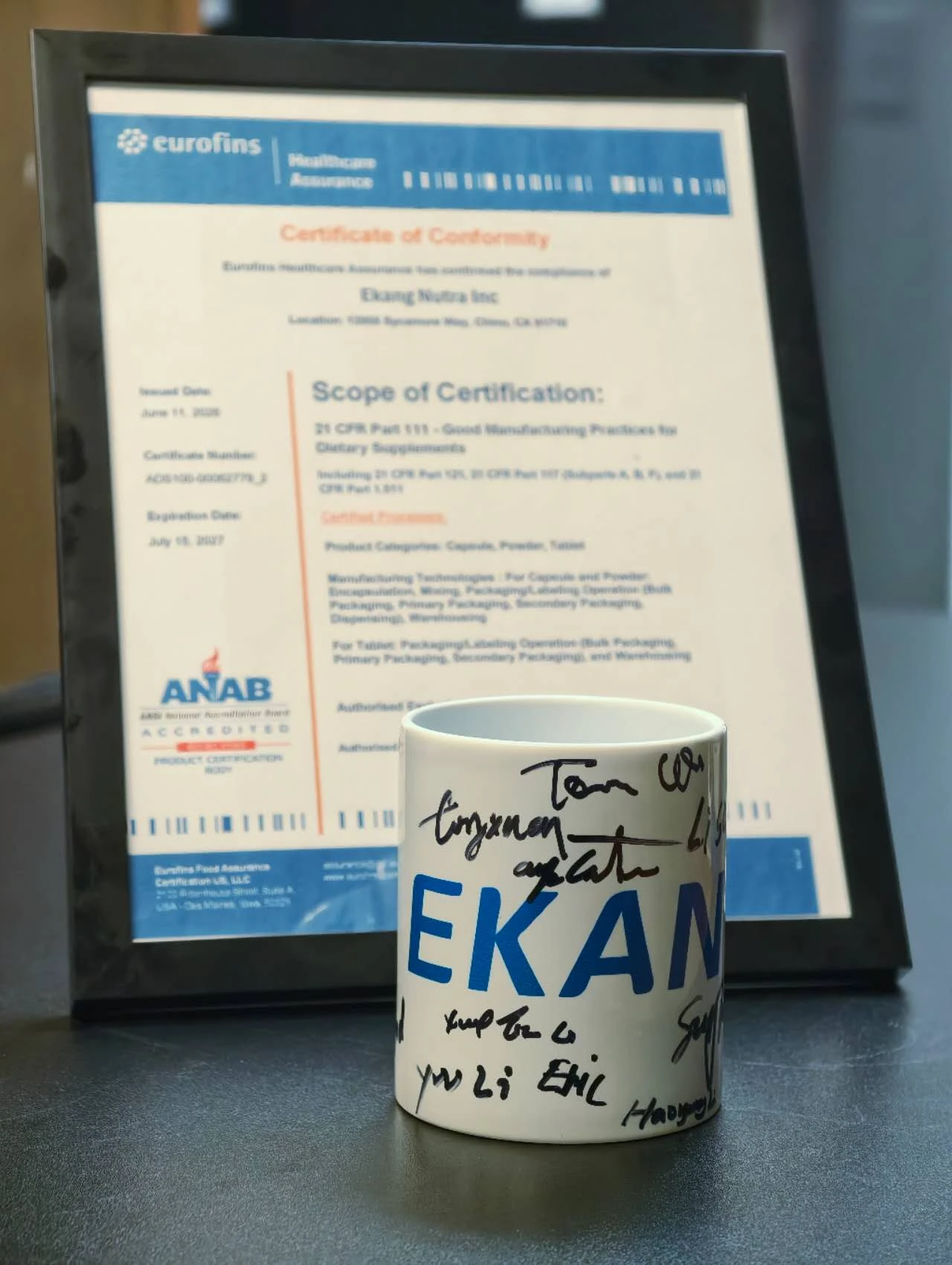
We’re proud to announce that Ekang Nutra’s California manufacturing facility has been independently certified by Eurofins Healthcare Assurance as compliant with FDA’s 21 CFR Part 111 current Good Manufacturing Practice (cGMP) regulations for dietary supplement production. The certification — accredited by the ANSI National Accreditation Board (ANAB) under ISO/IEC 17065 — covers our capsule, powder, and tablet operations, with no exclusions. It reflects our ongoing commitment to delivering safe, consistent, and fully compliant private label products for wellness brands across North America.
For brand owners, it’s worth understanding the difference between “cGMP compliance” and “third-party cGMP certification.” Many facilities self-claim compliance without independent verification. Third-party certification is different: an accredited outside auditor has to independently confirm — through on-site inspection, exhaustive document review, and cross-departmental interviews — that a facility genuinely meets the standard, not just that it says it does.And honestly, we didn’t get there on the first try — which is part of why this certification means something. Getting here took roughly six months of internal process upgrades and documentation work, and two full rounds of audit. Our first on-site audit surfaced findings that kept us from passing outright. Rather than dispute them, our QA team spent the next week in an intensive corrective sprint — fixing every gap the auditor identified — before a second review confirmed we’d closed them all. Certification was issued on June 11, 2026, valid through July 15, 2027.
What Does Third-Party cGMP Certification Actually Involve?
Third-party certification against 21 CFR Part 111 follows a structured, multi-stage process. Here’s what our facility went through — including the part that didn’t go smoothly the first time.
Stage 1: Pre-Audit Preparation
Before the official auditor arrived, our QA/QC team ran a full internal review against the 21 CFR Part 111 checklist to get ahead of likely compliance gaps. That groundwork included:
- Rewriting standardized SOPs covering raw material receiving, equipment cleaning, batch production, lab testing, packaging, and sanitation
- Strengthening our independent quality control function’s authority to approve or reject raw materials, in-process goods, and finished batches
- Rolling out recurring cGMP training for production, warehouse, and lab staff, with signed assessment records kept on file
- Reviewing production zone layouts to reinforce separation between raw material storage, mixing, filling, packaging, and quarantine areas
Stage 2: The First On-Site Audit — and Where We Fell Short
Eurofins auditors spent time on-site examining our facility, records, and staff across six core areas: personnel and training, facility and sanitation, raw material incoming control, production batch records, laboratory QC, and non-conformance/complaint handling.
We’ll be straightforward about this: our first audit did not result in certification. The auditor identified a set of non-conformances that had to be resolved before Eurofins could issue the certificate. Rather than treat that as a setback to gloss over, we treated it as the checklist — every finding was assigned an owner, a root cause, and a corrective action.
Personnel & Management System. Staff training records, health certificates, and job qualification documents were cross-checked, with direct interviews to confirm operators actually understood cGMP hygiene rules and procedures — not just that the paperwork existed.
Facility & Sanitation. Air filtration and ventilation, pest control records, equipment cleaning logs, zone separation, and equipment calibration and maintenance records were all reviewed against our SOPs.
Raw Material Incoming Control. Supplier qualification files, raw material Certificates of Analysis (COAs), identity testing reports, and quarantine procedures were examined, confirming identity testing on every incoming component — a non-negotiable requirement under 21 CFR Part 111.
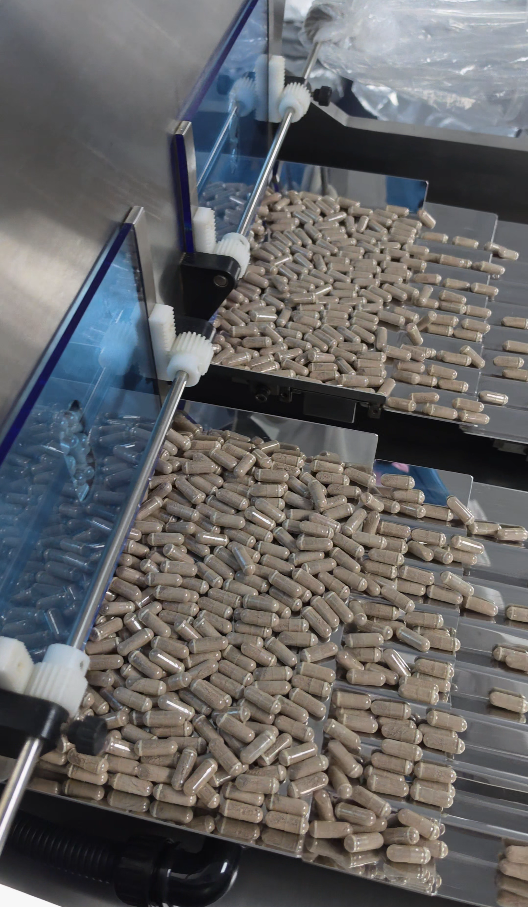
Production Batch Record Review. This is typically the most heavily weighted section of any cGMP audit. Auditors matched historical batch production records (BPRs) and master manufacturing records (MMRs) against every documented production step for our capsule and powder lines — weighing, mixing, encapsulation, in-process testing, yield calculation, and operator sign-off — plus packaging, labeling, and warehousing records for our tablet operations. Under FDA’s rule, an undocumented step is treated as one that never happened.
Laboratory QC & Finished Product Testing. Our in-house lab was reviewed for testing equipment calibration, microbial testing protocols, potency testing standards, reserve sample procedures, and finished product release criteria.
Non-Conformance & Complaint Handling. Auditors reviewed historical deviation records, root-cause investigations, and complaint files. Under 21 CFR 111.605, required records must be retained for one year past the shelf-life date, or two years past the date of distribution — whichever is longer.
Stage 3: One Week to Close Every Gap
With a clear list of findings in hand, our QA team ran a compressed, roughly one-week corrective action sprint — implementing fixes, documenting evidence for each one, and preparing everything for a second look. It was an intense week. Every finding needed a real fix, not a paperwork patch, because Eurofins would be checking again, not just taking our word for it.
Stage 4: Second Review & Certification
Eurofins reviewed our corrective actions and supporting documentation against every original finding. Only once every gap was confirmed closed — with no exclusions granted — was the official cGMP certificate issued, accredited by ANAB under ISO/IEC 17065 and covering our capsule, powder, and tablet operations.
Why Third-Party cGMP Certification Matters for Your Supplement Brand
As a California-based dietary supplement contract manufacturer, we understand the concerns that keep brand owners up at night: inconsistent batch quality, regulatory exposure, product recalls, and lost consumer trust. This certification — alongside our existing FDA Food Facility Registration and California Processed Food Registration — gives our private label partners concrete advantages:
- Stronger regulatory footing for Amazon, retail, and national distribution filings
- More consistent batch-to-batch potency, purity, and composition through standardized production controls
- Full batch traceability through complete production documentation, ready for any regulatory inspection or recall scenario
- A stronger credibility signal for your brand — U.S. buyers increasingly favor manufacturers with independently, ANAB-accredited verification over those that simply self-declare compliance
- Proof that our quality system holds up under real scrutiny, including a first audit we didn’t pass outright and had to earn our way through
Our Ongoing Commitment to cGMP Standards
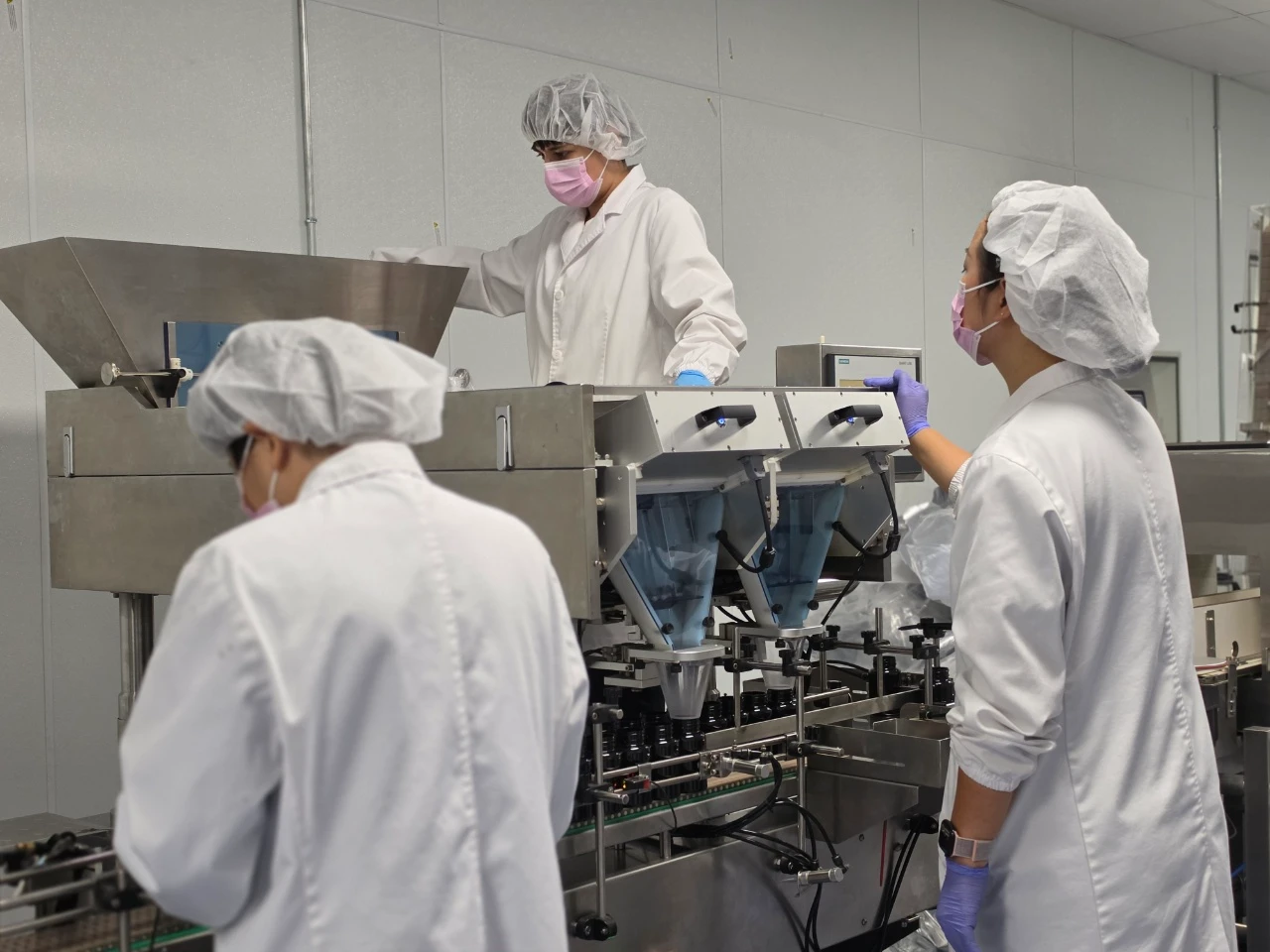
Certification isn’t a one-time milestone — it’s an ongoing operating standard, and our certificate is valid through July 15, 2027, subject to continued compliance. Ekang Nutra will maintain regular internal quality audits and continued facility and process upgrades to stay aligned with evolving FDA 21 CFR Part 111 requirements ahead of recertification.
Whether you need custom formulation, small-batch pilot runs, or full-scale private label production in hard capsules and powders — plus tablet packaging, labeling, and warehousing, our certified facility is built to deliver consistent, compliant supplement manufacturing for wellness brands.
Ready to see the facility and review our certification documentation for yourself? Contact our team to schedule a tour or request our compliance package.