Production transition
Changing manufacturers is a significant decision when a product is already selling. You may need to qualify a new facility, confirm that your formula and packaging can be reproduced, and plan inventory around the changeover. A move can make sense because of service, capacity, cost, quality, or a change in your product plans. The reason matters because it should shape what you check first.
This guide covers what to review before you decide, which information to gather, and how to set acceptance criteria for the first production at a new manufacturer.

A manufacturer transition starts with clear documentation: formulas, specifications, test methods, and packaging details.
Signs it may be time to consider a switch
One issue may have a straightforward explanation. A recurring pattern deserves a closer review.
- Batch variation. Compare the product with its written specifications. Changes in appearance, taste, fill weight, or mixability may matter, especially when they fall outside agreed limits or lead to repeated complaints.
- Unreliable lead times. Repeated delays, late notice, or unclear production schedules can make inventory planning difficult.
- Quality information is hard to obtain. Consider whether you can get the product specifications, lot release information, or other quality records covered by your agreement. A manufacturer may have legitimate confidentiality limits on internal batch records, so clarify access before you assume that every record will be transferred.
- The production fit has changed. Your volumes, minimum order quantities, product format, or capacity needs may no longer fit the current arrangement.
- Communication has become difficult. Slow responses, unclear responsibility, or invoice changes that are not explained can affect day-to-day operations.
- You have unresolved compliance questions. Ask for current records that support relevant facility registrations, certifications, label review, and the quality systems used for your product.
- Your service needs have changed. You may now want help with packaging, label design, or fulfillment, and need to know which of these services the manufacturer actually provides.
Before switching, write down what is not working and what evidence would show that a new partner can address it. This gives you a fair basis for comparing manufacturers.
Account for the costs and work
Moving production takes time on both sides. Your team may need to assemble technical files, review a new agreement, approve samples, and coordinate the changeover. Depending on the product, you may also need new supplier qualification, testing, packaging orders, or a stability program.
There can be a supply gap if the old and new production schedules do not line up. The new manufacturer may have different minimum quantities, component suppliers, or lead times. Labels may also need review if the responsible firm’s name or address, product details, or claims change.
These factors do not decide whether you should stay or leave. They help you estimate the time, cash, and inventory the transition will require.
What to gather before contacting a new manufacturer
Collect what you own and are allowed to share under your current agreement. You may not have the right to transfer a manufacturer’s proprietary process instructions or complete internal records.
| Information | Why the new manufacturer needs it |
|---|---|
| Formula, serving size, and ingredient specifications | These define the product the new facility is being asked to make. Confirm your rights to share the formula and any confidential information. |
| Ingredient names, grades, suppliers, and purchase restrictions | Branded ingredients may have authorized-source or licensing requirements. Tell the new manufacturer which sources are required and which substitutions need your written approval. |
| Finished-product specifications and test methods | These set the measurable acceptance criteria for the product. Confirm that the methods are suitable for the product and available to the new quality team. |
| Available lot documentation | Recent Certificates of Analysis and lot release information can help establish a baseline. Confirm which records the current manufacturer can provide and whether they are representative of the lots you have sold. |
| Packaging specifications | Share the bottle, closure, seal, film, label, carton, and other packaging details that affect fit, protection, and presentation. |
| Current label artwork and product claims | The new team can review the label against the formula, serving directions, responsible-firm details, and claims. |
| Stability information, if available | Existing data may help describe the product’s history, but do not assume it establishes shelf life for a changed process, facility, or package. Ask the quality team whether additional stability work is needed. |
| Existing manufacturing and quality agreements | Check ownership, confidentiality, notice periods, minimum commitments, record access, retained materials, and transition responsibilities. |
Use your current agreement to confirm ownership and which records can be shared.
For dietary supplements marketed in the United States, manufacturers must follow applicable current good manufacturing practice requirements under 21 CFR Part 111. These include written master manufacturing records for each unique formulation and batch size, batch production records, specifications, and quality control review. The exact records that a brand can obtain from its current manufacturer depend on the contract and confidentiality obligations. FDA’s dietary supplement CGMP guide explains the requirements.
Review the current contract before moving anything
Have a qualified attorney review the agreement if its terms are unclear. Pay particular attention to:
- Formula and development work. Confirm who owns the formula, specifications, artwork, and other project materials, and what the agreement allows you to transfer.
- Exclusivity and restrictions. Check whether any exclusivity, non-compete, or sourcing terms affect production elsewhere.
- Notice and minimum commitments. Identify the notice period, unfinished orders, minimums, and any charges tied to ending the relationship.
- Inventory and materials. Establish who owns remaining ingredients, packaging, work in process, and finished goods, and agree on how each will be handled.
- Records and confidentiality. Confirm what documentation can be shared with a prospective manufacturer and how confidential information must be protected.
If you use a private-label formula from a manufacturer’s catalog, the formula may not belong to your brand or be transferable. The new manufacturer may need to develop a separate formula to meet your target specifications. See our guide to private label, white label, and custom formulation.
How to plan a controlled transition
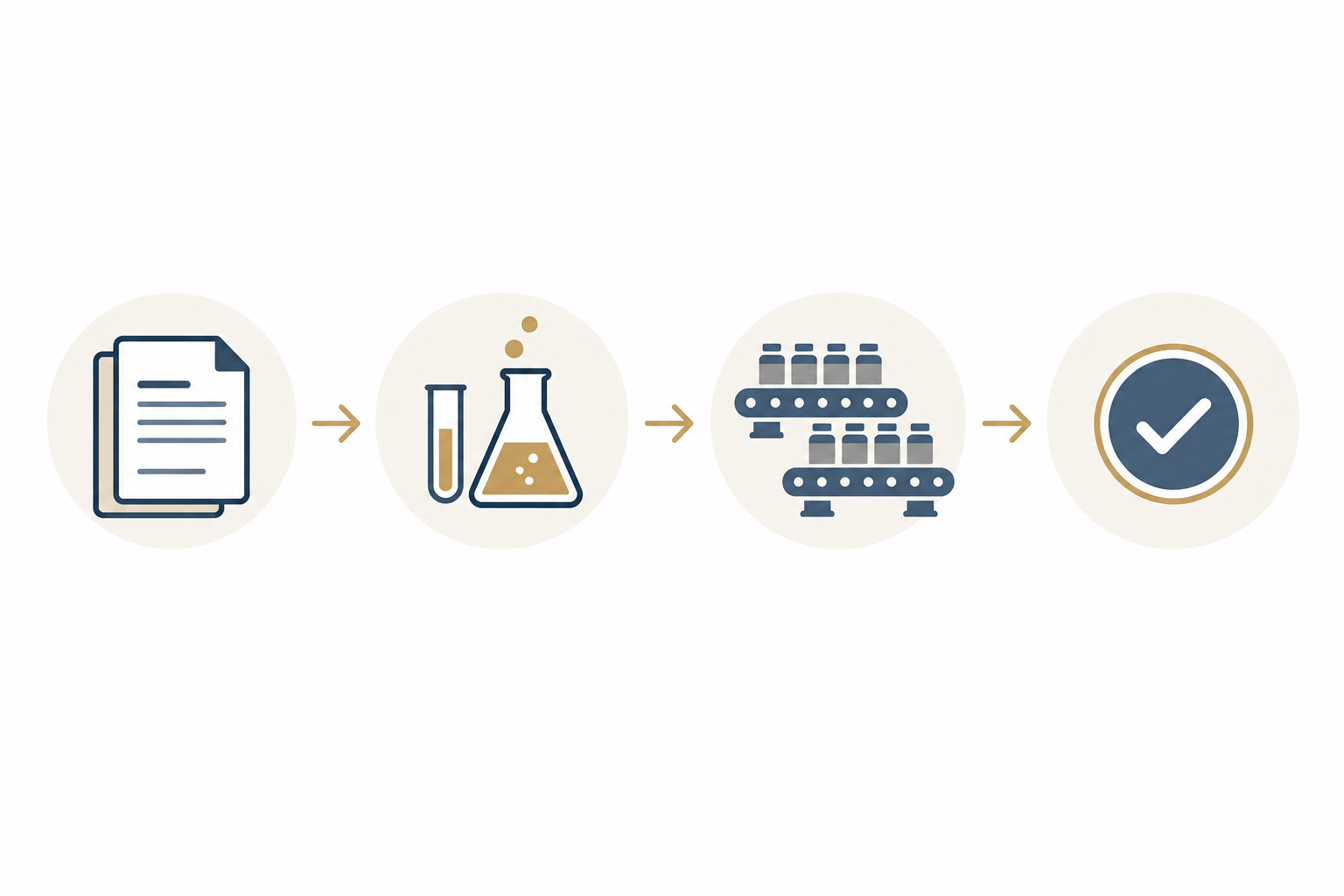
A transition can move through documentation review, a pilot or qualification run, inventory planning, and the first approved production order.
Use written criteria and assigned responsibilities at each stage. The sequence may vary by product and by what your current agreement allows.
Define the transfer scope.
Confirm which formula, specifications, packaging components, artwork, records, and intellectual property you can share. Record any confidentiality limits before sending files.
Review technical feasibility.
Ask the new manufacturer to assess the formula, serving size, dosage form, ingredients, process needs, and packaging. Confirm which ingredients it can source and what would require your approval.
Agree on quality requirements.
Set product and component specifications, suitable test methods, acceptance criteria, responsibilities for deviations and complaints, record access, and batch release arrangements in writing.
Run and assess a pilot or qualification batch.
First agree on what qualifies as a pilot at that facility and how its results will be reviewed. Compare samples and test results with the approved specifications, not appearance or taste alone. Decide whether the run is for evaluation or can be sold before production begins.
Review shelf-life support.
Discuss whether the prior stability data applies to the new formulation, manufacturing process, and package. If it does not support the proposed shelf life, agree on a suitable stability plan before assigning or carrying over a date code.
Check the label and supporting materials.
Review the Supplement Facts, ingredient and allergen information, directions, claims, and responsible firm’s name and address. Determine whether anything needs to change and who will approve the final artwork. FDA does not pre-approve dietary supplement labels; the companies responsible for marketing the product remain responsible for compliance. FDA’s overview of supplement regulation explains the agency’s role.
Plan inventory and the cutover.
Use demand, current stock, production and shipping lead times, component availability, and contract commitments to set order dates. Keep lot identification and release status clear if inventory from two manufacturers will be on hand at the same time.
Approve the first full order.
Confirm in writing that the first production run meets the agreed specifications and release requirements. Close out remaining inventory, materials, and records with the previous manufacturer according to your agreement.
Timing is often the hardest part to coordinate. Build the schedule around confirmed material availability, production slots, testing, quality review, and shipping. A pilot or qualification run may take longer than expected, so avoid setting a cutover date before the new manufacturer confirms the steps it needs to complete.
Already in production and weighing a move?
Send us the formula information you are authorized to share, product specifications, and a short description of the problem you want to solve. We can review whether the product fits our equipment and ingredient capabilities, then outline the information and qualification steps needed for a transition. Start the conversation →
Questions to ask a prospective manufacturer
- Can your facility make this formula and serving size with the process and package I need?
- Which ingredients or package components are outside your capabilities or sourcing arrangements?
- What information and records can you review, and how will confidential material be protected?
- How do you define a pilot or qualification batch, and what criteria will we use to assess it?
- Which incoming component checks and finished-product tests apply to this formula? Which methods are used, and who reviews the results?
- What is the expected lead time after ingredients and packaging are available, and what can change that schedule?
- Which current third-party certifications apply to this facility and the work in scope? Who issued each certificate, what does it cover, and when does it expire?
- Who handles quality questions, deviations, complaints, and release decisions for my product?
- Which services do you provide beyond manufacturing, such as label review, packaging, or fulfillment?
Ask for current documents that support each answer. A facility’s FDA food registration is required for many facilities handling food, including dietary supplements, but the registration does not mean FDA has approved the facility or its products. FDA’s food facility registration guide explains registration requirements. Review third-party certificates separately, including their issuing organization, validity dates, scope, and covered site.
For a broader evaluation framework, see our supplement manufacturer due diligence checklist.
Frequently asked questions
How long does it take to switch manufacturers?
There is no useful fixed timeline for every product. It depends on the completeness of your documentation, sourcing and packaging lead times, production availability, testing, and any stability work the quality team determines is needed. Ask the new manufacturer for a schedule with these steps and dependencies listed.
Will the product be identical after the switch?
The new manufacturer should work to the specifications and acceptance criteria you approve. Equipment, process, suppliers, and packaging can affect measurable or sensory characteristics. Review the first run against the agreed criteria and investigate any differences before approving routine production.
Can I take my formula with me?
Check your agreement. A custom formula may be transferable if the contract gives you the relevant rights. A catalog or private-label formula may belong to the manufacturer and may not be available for transfer.
Do I need to change the label?
Have the full label reviewed, even if the formula stays the same. The Supplement Facts may remain unchanged when the formula and serving information are unchanged, but verify them against the actual product. Review the responsible firm’s name and address, ingredient and allergen information, directions, claims, and any facility information shown on the package. The brand and its partners should agree who reviews and approves artwork.
How can I reduce the risk of running out of product?
Build the cutover schedule from actual demand, available stock, confirmed production and shipping dates, and any minimum commitments to the current manufacturer. If a new production run needs approval before release, include that time in the plan. Set a contingency plan for delays.
What if the product uses a specialty or branded ingredient?
Tell the new manufacturer before the feasibility review. Confirm whether it can source the required ingredient through an authorized channel, whether it needs supplier documentation, and whether you would consider an alternative. Approve any substitution against the product specifications before production.
What if the new manufacturer does not make my format?
Ask about format capability in the first conversation. If the equipment or process is outside its scope, you can assess another facility before spending time on a transfer.
Discuss your product and transition plan
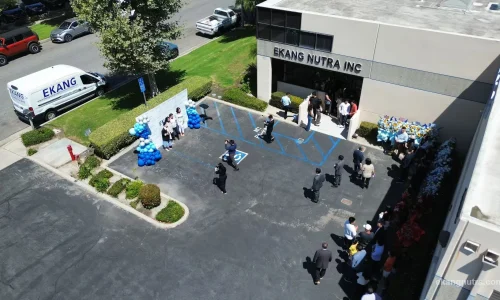
Ekang Nutra is based in California. Its facility is registered as a food facility with FDA, and the company reports that Eurofins Healthcare Assurance independently certified its cGMP program under a scheme accredited by ANAB to ISO/IEC 17065. Ask us for the current certificate and confirm its validity, covered facility, scope, and operations. FDA food facility registration is not FDA approval or endorsement of a facility or product.
Production typically takes four to eight weeks after raw materials and packaging arrive. Incoming raw material lots are tested for identity and potency. Confirm the current lead time, the tests that apply to each material, and the release criteria for your formula in the written project plan.