According to the latest data from Euromonitor, the global market for women’s health supplements reached $61.2 billion in 2025. More importantly, consumer behavior is undergoing a qualitative change—focus on “ingredient patent certification” and “clinical data support” increased by 32% in the past year.
As women’s health concerns shift from external manifestations and simple hormone supplementation to deeper dimensions such as cellular energy metabolism, mitochondrial function, the gut-ovarian axis, and delaying reproductive aging, over 65% of women of reproductive age and perimenopausal women are proactively concerned about ovarian function decline and seeking professional-grade solutions.
So, what changes will the women’s hormone-balancing supplement market see in 2026? Which trends are worth considering? And how can brands seize this growth window?
Analysis of the Most Watched Ingredients in 2026
1. Urolithin A – Cellular Youth Factor
Urolithin A is a metabolite derived from ellagitannins (found in pomegranates, nuts, and berries) and produced by the gut microbiota. Breakthrough research in 2024–2025 revealed that it transcends its traditional role as a mitophagy activator. A recent study in Nutrients shows that Urolithin A upregulates core circadian genes (BMAL1 and CLOCK), ensuring the precise timing of follicle development. It also activates the DNA repair pathway PARP1, protecting ovarian cells from oxidative damage and providing more efficient energy to oocytes by enhancing fatty acid oxidation.
2. S-equol – A “Smart” Estrogen Regulator
S-equol, produced from soy isoflavones via specific gut bacteria, is a natural selective estrogen receptor modulator (SERM). Its unique “smart” activity is context-dependent: when estrogen is low (perimenopause), it binds to ERβ receptors to provide mild estrogenic benefits; when estrogen is high, it exerts an anti-estrogenic effect to prevent overstimulation. Clinical trials confirm that 10 mg daily significantly improves menopausal symptom scores while supporting bone density and skin elasticity.
3. Fisetin – A “Precision Cleanser” for Ovarian Regeneration
Fisetin, found in strawberries and apples, is a potent senolytic. As ovaries age, “zombie” (senescent) cells accumulate, secreting inflammatory factors that disrupt the ovarian microenvironment. Fisetin selectively induces apoptosis in these cells by regulating the p53 and p21 pathways without damaging healthy tissue. This reduces the senescent burden, improves egg quality, and potentially extends reproductive lifespan.
4. “Cross-Border Star”: Creatine’s Unique Benefits for Female Hormones
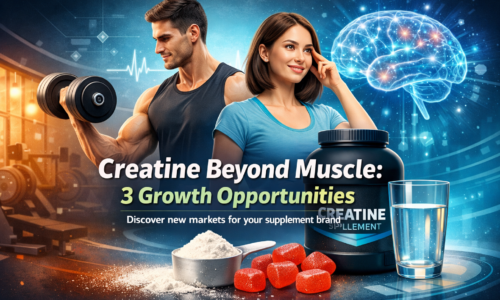
Once viewed strictly as a muscle-building supplement, creatine has pivoted toward women’s health. Its value extends to brain function (memory, mood) and bone health. Supplementation is particularly vital during perimenopause, as declining estrogen levels lead to reduced natural creatine synthesis. For women facing “brain fog” and fatigue, creatine offers essential multidimensional cellular energy support.
5. A New Track: The Gut-Ovarian Axis and Postbiotics
By 2026, the “gut-ovarian axis” has moved from theory to clinical application. Imbalances in gut microbiota can disrupt the enterohepatic circulation of estrogen, leading to hormonal disorders. Postbiotics—inactivated microbial cells and their metabolites—are emerging as stable, safe alternatives to probiotics. They help regulate systemic inflammation and hormone metabolism, offering a new pathway for supporting reproductive health by optimizing the internal environment.
Three Major Formulation Shifts in Hormone Balance Supplements for Women in 2026
1. From “Universal Solutions” to “Life-Cycle Precision”
In 2026, the “one-size-fits-all” supplement is obsolete. Modern consumers demand stage-specific physiological matching.
| Life Stage | Core Focus | Key Ingredient Synergy |
| Ages 20–30 (Menstrual Health) | PMS Relief & Cycle Regularity | Vitex (Chasteberry), Magnesium, Vitamin B6, Evening Primrose Oil |
| Ages 30–35 (Pre-conception) | Oocyte Quality & Ovulation Optimization | Myo-Inositol (40:1 ratio), CoQ10, NAC, Zinc |
| Ages 35–40 (Fertility Preservation) | Ovarian Reserve & AMH Maintenance | Urolithin A, S-Equol, Aronia Extract |
| Ages 40–45 (Early Perimenopause) | Hormonal Fluctuations & Mood Support | S-Equol, Black Cohosh, Ashwagandha |
| Ages 45+ (Post-Menopause) | Longevity, Bone & Cardiovascular Health | Creatine, S-Equol, Calcium, Vitamin D3+K2 |
2. From “Single Ingredient” to “Pathway Synergy”
The most successful 2026 formulations are not just lists of ingredients; they are strategic combinations of biological pathways.
The Gold Standard: Cellular Microcirculation Targeted Intervention
This systemic model replaces traditional “symptom-patching” with a three-dimensional approach:
Pathway 1: Microcirculation & Endothelial Health
Ingredient: Estrobal® Red Pomegranate Flavonoids (80x the flavonoid content of standard pomegranate; KFDA-certified for menopausal symptom relief).
Pathway 2: Multi-Dimensional Antioxidant Defense
Ingredient: AroniaCraft® Polish Aronia Extract (Patented water-extraction; polyphenol content 5–8x higher than blueberries).
Pathway 3: Mitochondrial Energy Metabolism
Ingredient: Crystal QH™ (Patented Cocrystal Ubiquinol); FDA-GRAS certified for cellular energy restoration.
3. From “Potency Wars” to “The Bioavailability Arms Race”
In 2026, unabsorbed nutrients are considered wasted capital. Advanced delivery systems have become the primary brand differentiator.
Comparative Analysis of Mainstream Delivery Technologies
| Technology Platform | Mechanism | Key Applications | Competitive Advantage |
| Nano-Liposomes | Phospholipid bilayer encapsulation | Urolithin A, Silymarin | 300–500% increase in bioavailability; extended circulation. |
| Cocrystal Technology | Molecular-level crystal engineering | CoQ10 (Crystal QH™) | Superior stability and instant water dispersibility. |
| Self-Emulsifying (SNEDDS) | Forms micro-emulsions upon ingestion | Fat-soluble Vitamins, Phytosterols | Mimics dietary fat absorption paths for maximum uptake. |
| Plant-Derived Vesicles | Plant-based extracellular vesicles | Polyphenols, miRNA | Natural targeting; high stability in gastric and intestinal environments. |
2026 Consumer Insights: Who is Buying?
Core Persona Profiles in Women’s Endocrine Health
Persona 1: The PCOS Warrior (Ages 18–35)
- Focus: Natural cycle restoration, acne management, and metabolic health (insulin sensitivity).
- Information Sources: TikTok/Reels health influencers, “PCOS Cyster” communities, and holistic nutritionists.
- Buying Keywords: Myo-Inositol, NAC (N-Acetyl Cysteine), Low-Glycemic Friendly, Glucose Support.
Persona 2: The Fertility Optimizer (Ages 28–40)
- Focus: Oocyte (egg) quality, AMH (Anti-Müllerian Hormone) levels, and endometrial lining thickness.
- Information Sources: Reproductive endocrinologists (REI), fertility-tracking apps (Clue, Natural Cycles), and Evidence-Based Medicine (EBM) portals.
- Buying Keywords: CoQ10 (Ubiquinol), Mitochondrial Support, Cellular Antioxidants, Microcirculation.
Persona 3: The Perimenopause Navigator (Ages 40–55)
- Focus: Hot flashes/night sweats, sleep architecture, mood stability, and “Brain Fog.”
- Information Sources: Menopause specialists (NAMS certified), health podcasts (e.g., Huberman Lab, Dr. Mary Claire Haver), and peer recommendations.
- Buying Keywords: S-Equol, Black Cohosh, Phytoestrogens, Non-Hormonal Therapy (NHT).
Persona 4: The Post-Menopausal Longevity Manager (Ages 55+)
- Focus: Bone mineral density (BMD), cardiovascular protection, and cognitive longevity.
- Information Sources: Primary care physicians, longevity-focused medical journals, and specialized pharmacies.
- Buying Keywords: Creatine Monohydrate, Bone Density, Cardiac Support, SERMs (Selective Estrogen Receptor Modulators).
How to Turn Hormone Balance Trends into Marketable Products
Formulation Development Roadmap
Step 1: Identify Target Pathways
Avoid “scattered” formulas. Select 1–2 core pathways to anchor your brand’s authority:
- Ovarian Microcirculation: Enhancing blood flow to the follicular environment.
- ERβ Signaling: Selective modulation of estrogen receptors for hormonal balance.
- Mitophagy Support: Clearing damaged mitochondria to rejuvenate aging oocytes.
Step 2: Select Core Ingredients
- Prioritize ingredients with Human Clinical Trials (RCTs) and Safety Certifications.
- Reference proven product matrices, such as GRANVER’s “Pomegranate + Aronia + Co-crystal Q10” combination
Step 3: Design Delivery System
- Match the technology to the molecule’s lipophilicity and target site:
- Softgels: Ideal for lipid-soluble complexes (e.g., S-Equol, Vitamin D3).
- Nano-Emulsion Liquids: For rapid-absorption needs (e.g., “Ready-to-Drink” shots).
- Tablets/Capsules: For ingredients requiring high stability and controlled release.
Step 4: Rigorous Safety & Compliance Optimization
Eliminate “Hidden Risks” to protect brand equity:
- Screen for contaminants (e.g., Coumarin in Cinnamon, heavy metals in raw botanicals).
- Provide a full COA (Certificate of Analysis) for every batch to ensure transparency.
Step 5: Clinical Evidence Accumulation
- Even pilot studies provide a massive marketing advantage.
- Example: Ongoing Urolithin A clinical trials (focused on sleep quality and cellular markers) serve as powerful “Reason to Believe” (RTB) for premium consumers.
Selecting the Right CDMO Partner
Your supplement manufacturer is your R&D partner, not just a vendor. Evaluate potential partners based on these four critical pillars:
1. Compliance and Certification
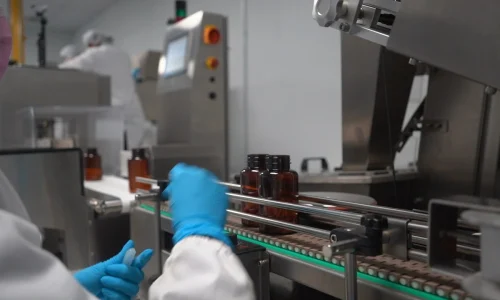
Select FDA-registered, cGMP-certified facilities. If targeting international markets, confirm the facility can provide complete compliance documentation packages, including ingredient disclosures, allergen statements, and certificates of origin.
2. Multi-Disciplinary R&D Capabilities
Ideal manufacturing partners should possess:
- Interdisciplinary R&D teams (MDs, PhDs in pharmaceutical sciences, nutrition experts)
- Access to patented ingredients
- Advanced engineering for Complex Dosage Forms (e.g., liquid-filled hard caps).
3. Supply Chain Transparency
Require suppliers to provide raw material traceability information. For botanical extracts, confirm batch testing records for heavy metals, microorganisms, and pesticide residues. Ideal partners should offer complete traceability from raw material to finished product.
4. Agility & Scalability (MOQ Flexibility)
The path from Prototype (7–14 days) to Small Batch Pilot and finally Mass Production must be seamless. For startup brands, seek partners offering tiered minimum order quantities (MOQs).
2026 Product Opportunity Windows
Opportunity 1: Cycle Syncing Kits
Develop a combination of formulas targeting the four phases of the menstrual cycle (follicular phase formula, ovulation support, luteal phase soothing, and menstrual nourishment). This requires complex formula design and packaging capabilities, but can build extremely high brand loyalty.
Opportunity 2: Cellular Energy Beverages
Formulate mitochondrial support ingredients like urolithin A and CoQ10 into convenient beverages. Utilize nano-emulsion technology to solve water solubility challenges, creating a “daily bottle for ovarian anti-aging” habit.
Opportunity 3: Menopause Brain Fog Solutions
Combine creatine, S-equol, and Bacopa monnieri to target cognitive decline during hormonal fluctuation periods. This fills the product gap in the “hormone-brain connection” space.
Opportunity 4: Gut-Hormone Axis Probiotics
Screen specific strains supporting “estrobolome” function, developing postbiotic products targeting perimenopausal women. This category remains relatively uncrowded but has solid scientific foundations.
Conclusion
The female hormone-balancing supplement market is at a turning point. The winners of 2026 will not be brands that simply jump on the bandwagon with “women’s vitamins,” but rather innovators who truly understand the life cycle, embrace cell science, and invest in delivery technologies.
From urolithin A’s mitophagy to S-estrol’s selective ERβ activation, and the women-specific application of creatine—these trends all point in one direction: a new era of precise, safe, and evidence-based hormone health management.
As your supplement manufacturing partner, we are ready to turn this vision into reality. Whether you are an established brand seeking differentiated formulations or an entrepreneur looking to enter this market, we possess the expertise and technology platform to transform concepts into compliant, effective, and marketable products. Contact us today to launch your 2026 hormone-balancing product line.