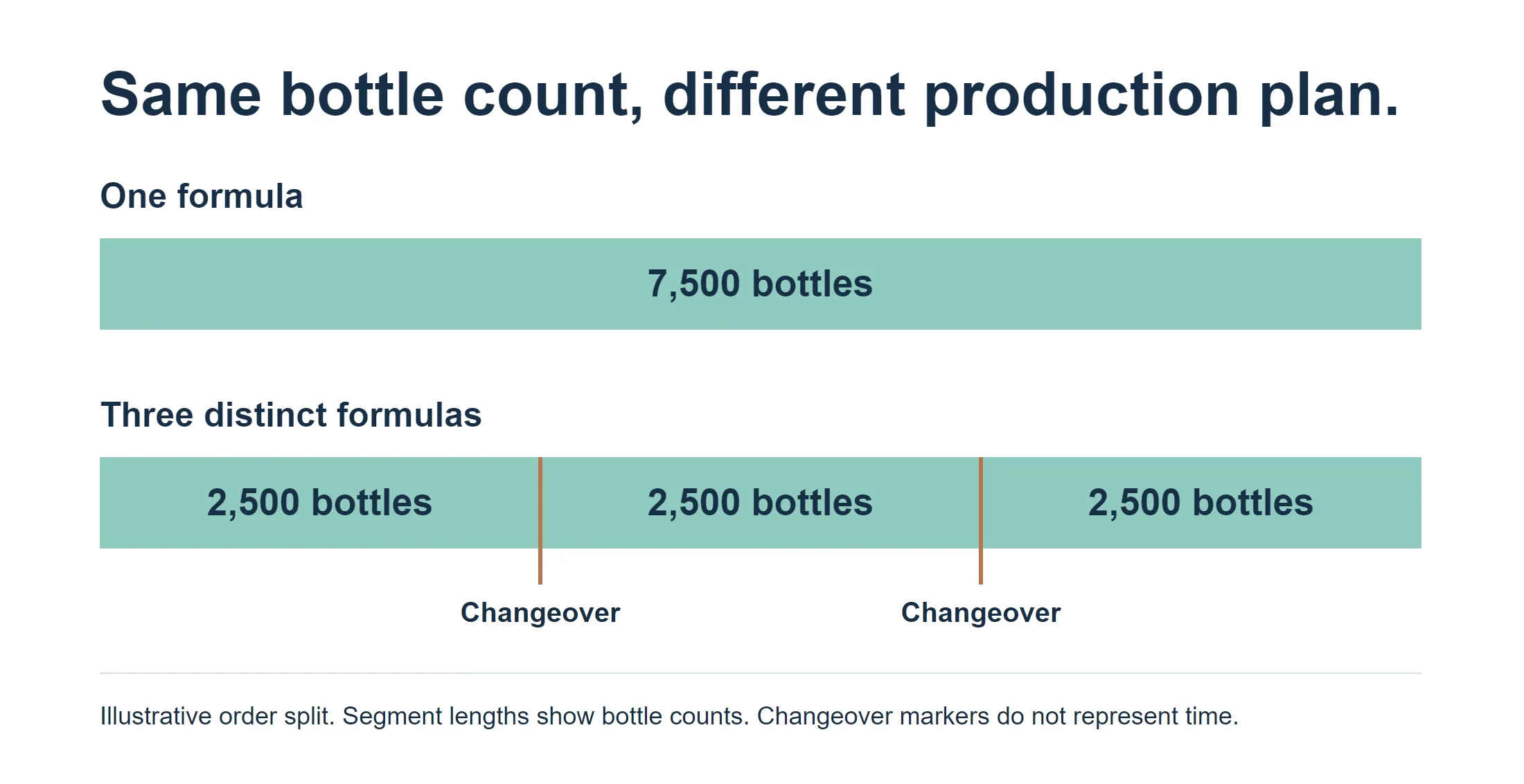
If the formulas and packaging have comparable costs, expect a higher manufacturing quote for three hard capsule SKUs at 2,500 bottles each than for one SKU at 7,500 bottles. The total bottle count is the same. The factory still has to clean the line and set it up again between formulas, and each smaller run has fewer bottles over which to spread that work.
Sourcing a patented ingredient can also slow down the quote, especially when the manufacturer has never dealt with its supplier. If you’ve already spoken with the supplier, introduce the two teams when you request pricing and forward any terms you’ve discussed.
Why splitting the same volume raises the quote
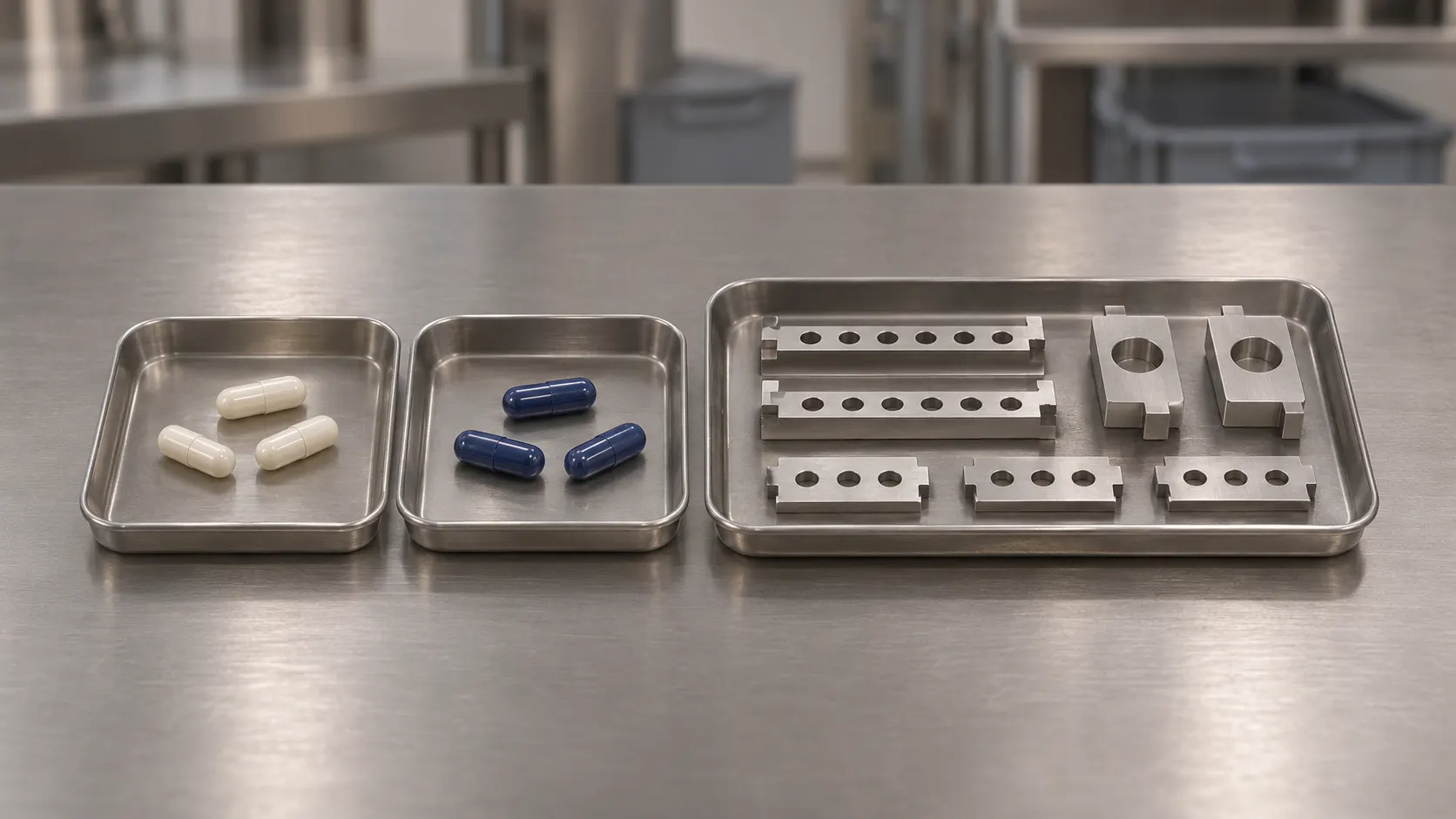
When the next formula uses the same equipment, the crew has to clear the previous materials and clean the relevant parts before setting up for the new batch. A different shell size may require a tooling change. A blend that flows differently may need a new filler setup and checks to confirm it can achieve the target fill weight. The work depends on the products and equipment. U.S. dietary supplement CGMP rules also address equipment cleaning and require a master manufacturing record for each unique formulation and batch size. [1, 2]
Picture the three formulas running back to back on the same line. The crew prepares the line for the first run and changes it over twice. For a single 7,500-bottle run, those two formula changes go away. Ask the factory how many runs it has priced and where the changeover cost appears. It may be listed separately or included in each SKU’s bottle price.
| What changes | What to ask the manufacturer |
| Each SKU has a different formula | How many blending and filling runs did you quote? Which setup and verification costs repeat? |
| The formula stays the same and the shell size changes | Will the new shell size require a separate filling run or a tooling change? Does the fill target change? |
| The finished capsule stays the same and only the label or bottle count changes | Can one bulk capsule run feed separate packaging jobs? What are the packaging setup and minimum for each version? |
If you can launch with fewer formulas, ask the manufacturer to price a phased launch alongside the full range. Specify bottles per SKU in both versions. If you are deciding whether two products can use the same shell size, start with the capsule size and fill weight guide.
Introduce the patented ingredient supplier early
If the manufacturer hasn’t worked with the supplier before, it may have to find the right sales contact, explain the project and wait for the supplier to confirm the grade, price and availability. That can delay the finished product quote before a production date is even on the calendar.
If you’ve already been in touch with the ingredient supplier, copy your contact on the inquiry to the manufacturer. Include the exact trade name and grade, amount per serving, sales market and any written quote you have. Forward the price, pack size, minimum purchase and quote expiry. If the supplier has confirmed stock or an expected ship date, include that too. The manufacturer can take the conversation from there and check what applies to your order.
The introduction can save time on the first round of emails. It may lower the finished product quote if you’ve secured a better ingredient price and the supplier will honor it when the manufacturer places the order. Ask the factory to confirm those terms and include the resulting ingredient cost in its quote. It still needs to complete its usual supplier and material checks.
Get an estimate for the date the ingredient will reach the factory and a separate estimate for finished product shipment. If you plan to print the ingredient trademark or logo on the label, check with the owner about any agreement or artwork approval before ordering labels. [3]
Check what the minimum order applies to
Ask for the minimum in finished bottles per SKU, then ask what sets it. A production minimum may come from the batch size. A purchasing minimum can come from a raw material supplier or a custom packaging order. A project can meet the factory’s bottle minimum and still require a larger purchase of one component.
Suppose you plan to order 2,000 bottles with 60 capsules each. If every capsule uses 100 mg of a specified raw material, the nominal requirement is 12 kg before allowing for production losses, samples or other agreed quantities. If the supplier sells that material in 25 kg packs, ask for the actual quantity the factory expects to use and how it will bill the balance. The same question applies to custom printed labels if the printer’s minimum exceeds the first bottling run.
Before placing the order, get written answers to four practical questions:
- How much of the minimum purchase will I pay for upfront?
- Who owns the leftover stock and where will it be stored?
- Can I use the remaining stock on a reorder, and how will it appear on that quote?
- What happens if the label changes or the material is no longer within its usable life?
Buying a full pack can tie up more cash than the first batch consumes. If the factory will hold the balance for you, compare what you pay on the first order with what you expect to pay on the next one. Keep the assumptions visible until the supplier confirms them.
Ask for the same quote breakdown from each manufacturer
Give suppliers the same formula, shell, servings per bottle, quantity per SKU, packaging and delivery point. Then ask them to show which charges apply per production run, which apply per SKU and which are only charged on the first order. If testing is listed as included, ask what they will verify and what records they will provide. Compare that scope before comparing price per serving. [4]
You can send this with the brief. “Please quote the first order total for each SKU and show any charges for changeovers or full packs of ingredients. Tell us which charges repeat on a reorder at the same quantity. We have included our ingredient contact and the terms discussed so far. Please flag what the supplier still needs to confirm.”
When the quote comes back, note the stock you are paying for as well as the bottles you expect to receive. The amount due on the first order is the number you need for cash planning. For a repeat order estimate, ask the manufacturer to show which prepaid materials it expects to draw down and which items it will need to buy again.
Request a hard capsule manufacturing quote
Send us the formula and bottle quantity for each SKU, along with the packaging and target delivery date. If you’ve already spoken with a patented ingredient supplier, introduce us to your contact and forward any quote or availability details you have. If you need us to contact the supplier for you, include the ingredient trade name and grade. See our hard capsule manufacturing service for available formats.
Sources
[1] U.S. Code of Federal Regulations. 21 CFR 111.27 and 111.205. Equipment and utensil requirements and master manufacturing records for dietary supplements.
[2] IMA Group. Accuracy, productivity and cleanliness: how to achieve the best results in nutraceutical capsule filling processes. Equipment cleaning, tooling changes and filling trials.
[3] Givaudan. Our Brands. Branded ingredient and trademark partnership terms for labels, packaging and communications.
[4] U.S. Code of Federal Regulations. 21 CFR 111.70 and 111.75. Establishing and verifying dietary supplement specifications.